
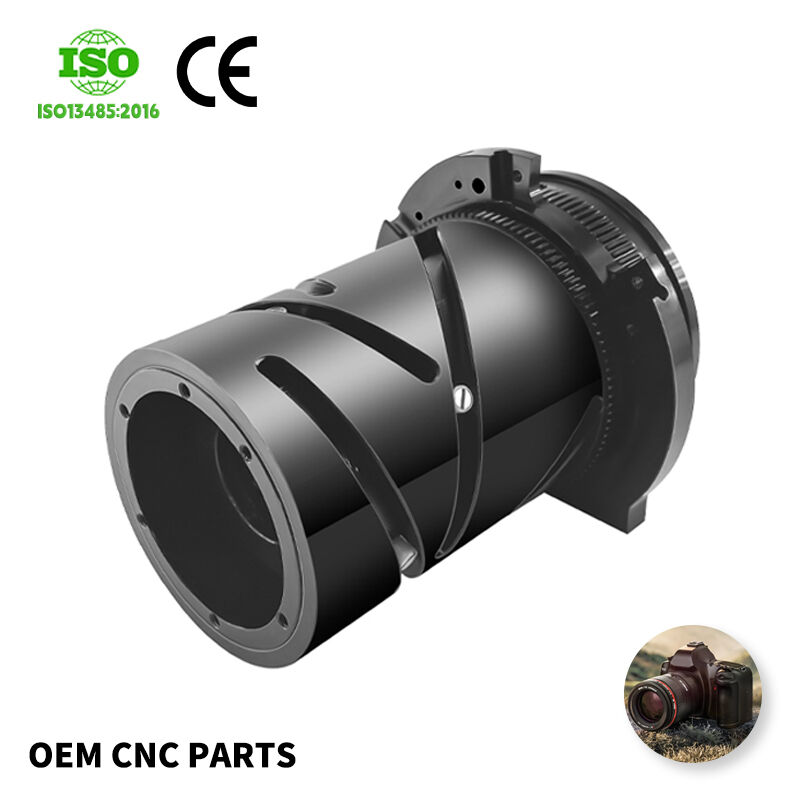
Modern manufacturing demands have pushed the boundaries of traditional machining methods, leading to revolutionary advances in precision engineering. 5-Axis Machining has emerged as the gold standard for producing complex geometries and intricate components that were previously impossible to manufacture with conventional three-axis systems. This advanced manufacturing technology enables simultaneous movement along five different axes, providing unprecedented flexibility and accuracy in part production. Industries ranging from aerospace to medical devices rely heavily on 5-Axis Machining to meet stringent quality requirements and achieve superior surface finishes on their most critical components.
Fundamental Principles of Advanced Multi-Axis Manufacturing
Understanding the Five-Axis Configuration
The core concept behind 5-Axis Machining involves the integration of two additional rotational axes beyond the standard X, Y, and Z linear movements. These rotational axes, typically designated as A and B (or sometimes A and C), allow the cutting tool or workpiece to pivot and rotate during the machining process. This capability transforms how manufacturers approach complex part geometries, eliminating the need for multiple setups and reducing the potential for cumulative errors. The simultaneous five-axis movement creates a machining envelope that can access virtually any surface of a workpiece from optimal cutting angles.
Traditional three-axis machining requires multiple operations and fixture changes to complete complex parts, often resulting in compromised accuracy and extended production times. 5-Axis Machining eliminates these limitations by maintaining the workpiece in a single setup throughout the entire manufacturing process. This approach significantly reduces handling time, minimizes human error, and ensures consistent dimensional accuracy across all machined surfaces. The technology particularly excels when working with parts that feature undercuts, deep cavities, or compound angles that would be impossible to reach with conventional machining methods.
Machine Architecture and Control Systems
Modern 5-Axis Machining centers incorporate sophisticated control systems that coordinate all five axes simultaneously while maintaining precise tool path accuracy. These systems utilize advanced algorithms to calculate optimal cutting strategies, automatically adjusting feed rates and spindle speeds based on material properties and geometric constraints. The machine architecture typically features either a trunnion table design, where the workpiece rotates, or a swivel head configuration, where the spindle assembly moves. Each design offers specific advantages depending on the application requirements and part characteristics.
The control software plays a crucial role in maximizing the benefits of 5-Axis Machining by optimizing tool orientation throughout the cutting process. Advanced CAM programming enables manufacturers to maintain constant chip loads, minimize tool deflection, and achieve superior surface finishes. These systems also incorporate collision detection algorithms that prevent costly accidents while enabling complex machining operations in confined spaces. The integration of real-time monitoring systems further enhances the reliability and precision of five-axis operations.
Superior Precision and Accuracy Benefits
Enhanced Dimensional Control
One of the most significant advantages of 5-Axis Machining lies in its ability to maintain exceptional dimensional accuracy throughout the manufacturing process. By eliminating multiple setups and fixture changes, this technology reduces the accumulation of tolerances that typically occur in conventional machining operations. The continuous workpiece positioning ensures that all features are machined relative to a single datum reference, resulting in superior geometric accuracy and improved part-to-part consistency. This level of precision is particularly critical in industries such as aerospace and medical device manufacturing, where tolerances often measure in microns.
The improved accuracy of 5-Axis Machining extends beyond dimensional control to include superior surface finish quality. The ability to maintain optimal tool orientation relative to the workpiece surface throughout the cutting process minimizes surface roughness and eliminates the witness marks typically associated with multiple setup operations. This enhanced surface quality often eliminates the need for secondary finishing operations, reducing overall production time and costs while improving the final product quality.
Reduced Setup and Fixturing Requirements
Traditional machining operations often require multiple fixtures and complex workholding solutions to access all surfaces of a complex part. 5-Axis Machining dramatically simplifies this process by enabling complete part manufacturing in a single setup. This reduction in fixturing requirements not only decreases setup time but also eliminates the potential for setup-induced errors that can compromise part accuracy. The simplified workholding also reduces the complexity and cost of fixture design and manufacturing.
The single-setup capability of five-axis systems provides additional benefits in terms of production flexibility and efficiency. Manufacturers can quickly transition between different part configurations without extensive retooling, making this technology ideal for both high-volume production and low-volume, high-mix manufacturing environments. The reduced setup requirements also contribute to improved machine utilization rates and faster overall throughput times.
Complex Geometry Manufacturing Capabilities
Undercut and Cavity Machining
The unique positioning capabilities of 5-Axis Machining enable manufacturers to produce complex internal geometries that would be impossible with conventional three-axis systems. Deep cavities, undercuts, and reverse-tapered features can be machined with precision and efficiency, opening new possibilities for part design and functionality. This capability is particularly valuable in industries such as mold making, where complex cooling channels and intricate surface details are essential for optimal performance.
The ability to machine complex geometries in a single operation eliminates the need for specialized tooling or unconventional manufacturing processes. Features such as compound angles, twisted surfaces, and intersecting holes can be produced with standard cutting tools, reducing tooling costs and inventory requirements. This versatility makes 5-Axis Machining an ideal solution for prototype development and low-volume production of highly complex components.
Sculptured Surface Manufacturing
Industries requiring sculptured surfaces, such as automotive and consumer products, benefit significantly from the advanced capabilities of 5-Axis Machining. The technology excels at producing smooth, flowing surfaces that meet both aesthetic and functional requirements. The continuous tool orientation control enables optimal cutting conditions throughout the machining process, resulting in superior surface quality and reduced post-processing requirements.
The precision achievable with five-axis systems makes them ideal for manufacturing components with complex curvatures and varying cross-sections. Turbine blades, impellers, and other aerodynamically critical components can be produced with exceptional accuracy and surface quality. The ability to maintain consistent chip loads and cutting speeds across varying surface geometries ensures optimal tool life and consistent results across multiple parts.
Enhanced Tool Life and Cutting Efficiency
Optimal Tool Orientation
The continuous adjustment capability inherent in 5-Axis Machining allows for optimal tool orientation throughout the cutting process, significantly extending tool life and improving cutting efficiency. By maintaining the ideal cutting angle relative to the workpiece surface, the system reduces tool wear and enables higher cutting speeds and feed rates. This optimization results in improved productivity and reduced per-part manufacturing costs, particularly important in high-volume production environments.
The ability to adjust tool orientation also enables the use of shorter, more rigid cutting tools that provide superior accuracy and surface finish quality. These shorter tools exhibit reduced deflection under cutting forces, enabling tighter tolerances and improved dimensional accuracy. The enhanced rigidity also allows for more aggressive cutting parameters, further improving productivity and efficiency.
Advanced Cutting Strategies
Modern 5-Axis Machining systems incorporate sophisticated cutting strategies that maximize material removal rates while maintaining part quality. Trochoidal milling, adaptive clearing, and other advanced techniques can be implemented more effectively with five-axis capability, resulting in reduced cycle times and improved tool life. These strategies optimize chip load distribution and minimize heat generation, contributing to improved surface quality and dimensional accuracy.
The implementation of advanced cutting strategies in five-axis systems also enables manufacturers to machine difficult-to-cut materials more effectively. Materials such as titanium, Inconel, and hardened steels benefit from the improved cutting conditions achievable with optimal tool orientation and advanced toolpath strategies. This capability expands the range of materials that can be efficiently processed while maintaining high quality standards.
Industry Applications and Use Cases
Aerospace and Defense Manufacturing
The aerospace industry has been one of the primary drivers of 5-Axis Machining technology development, with applications ranging from structural components to engine parts. Critical components such as turbine blades, compressor wheels, and structural brackets require the precision and complexity capabilities that only five-axis systems can provide. The ability to machine these components in a single setup while maintaining tight tolerances makes this technology essential for aerospace manufacturing operations.
Defense applications similarly benefit from the advanced capabilities of five-axis systems, particularly in the production of specialized components for military vehicles and equipment. The technology enables the manufacture of lightweight, high-strength components with complex geometries that optimize performance while minimizing weight. The precision and repeatability of 5-Axis Machining ensure that critical defense components meet stringent quality and performance requirements.
Medical Device Manufacturing
The medical device industry relies heavily on 5-Axis Machining for producing implants, surgical instruments, and diagnostic equipment components. The biocompatibility requirements and precision tolerances demanded in medical applications make five-axis technology ideal for this industry. Complex geometries such as hip joint replacements, spinal implants, and surgical cutting tools can be manufactured with the accuracy and surface quality required for medical applications.
The ability to machine complex internal features and precise surface textures makes 5-Axis Machining particularly valuable for medical device manufacturing. Components requiring specific surface roughness characteristics for biological compatibility can be produced with consistent quality and repeatability. The single-setup capability also ensures that critical dimensions and relationships are maintained throughout the manufacturing process.
Economic Advantages and ROI Considerations
Reduced Production Time
The efficiency gains achieved through 5-Axis Machining translate directly into reduced production times and improved profitability. The elimination of multiple setups and fixture changes significantly reduces overall cycle times, particularly for complex parts that would otherwise require numerous operations. This time reduction enables manufacturers to increase throughput and respond more quickly to customer demands while maintaining high quality standards.
The reduced production time also contributes to improved delivery performance and customer satisfaction. Manufacturers can offer shorter lead times and more flexible scheduling options, providing competitive advantages in fast-paced markets. The improved efficiency also enables better resource utilization and higher overall equipment effectiveness, maximizing the return on equipment investments.
Quality Improvements and Scrap Reduction
The enhanced accuracy and consistency achievable with 5-Axis Machining result in significant quality improvements and reduced scrap rates. The elimination of setup-induced errors and the improved dimensional control contribute to higher first-pass yields and reduced rework requirements. These quality improvements translate directly into cost savings and improved profitability, particularly important in high-value applications where scrap costs are significant.
The consistency of five-axis operations also enables manufacturers to implement statistical process control more effectively, further improving quality outcomes and reducing variation. The ability to maintain tight control over critical dimensions and surface characteristics ensures that products meet customer specifications consistently, reducing warranty costs and improving customer satisfaction.
FAQ
What types of materials can be effectively processed using five-axis technology
5-Axis Machining systems can effectively process a wide range of materials including aluminum, steel, titanium, stainless steel, plastics, and composite materials. The technology is particularly beneficial for difficult-to-machine materials such as Inconel, Hastelloy, and other superalloys commonly used in aerospace applications. The optimal tool orientation capabilities enable better cutting conditions and heat dissipation, making it possible to machine these challenging materials with improved tool life and surface quality.
How does five-axis capability compare to traditional three-axis machining in terms of setup time
While initial programming for 5-Axis Machining may require additional time due to the complexity of five-axis toolpaths, the overall setup time is typically reduced significantly. The ability to complete complex parts in a single setup eliminates multiple fixture changes and part repositioning operations that are required with three-axis systems. This reduction in physical setup time often outweighs the additional programming requirements, particularly for complex parts that would otherwise require multiple operations.
What are the typical accuracy tolerances achievable with modern five-axis systems
Modern 5-Axis Machining centers can routinely achieve tolerances of ±0.001 inches (±0.025mm) or better, with high-precision systems capable of tolerances in the range of ±0.0002 inches (±0.005mm). The actual achievable tolerance depends on factors such as part geometry, material properties, cutting conditions, and machine condition. The single-setup capability of five-axis systems often enables better tolerance achievement compared to multi-setup three-axis operations due to the elimination of cumulative setup errors.
What factors should be considered when evaluating five-axis technology for a manufacturing operation
Key factors to consider include part complexity, production volume, material requirements, required tolerances, and existing manufacturing capabilities. The investment in 5-Axis Machining technology is most justified when manufacturing complex parts that would otherwise require multiple setups or when tight tolerances and superior surface finish are critical requirements. Additionally, consider the availability of skilled operators and programmers, as five-axis operations require more advanced technical knowledge compared to conventional three-axis machining.
Table of Contents
- Fundamental Principles of Advanced Multi-Axis Manufacturing
- Superior Precision and Accuracy Benefits
- Complex Geometry Manufacturing Capabilities
- Enhanced Tool Life and Cutting Efficiency
- Industry Applications and Use Cases
- Economic Advantages and ROI Considerations
-
FAQ
- What types of materials can be effectively processed using five-axis technology
- How does five-axis capability compare to traditional three-axis machining in terms of setup time
- What are the typical accuracy tolerances achievable with modern five-axis systems
- What factors should be considered when evaluating five-axis technology for a manufacturing operation