
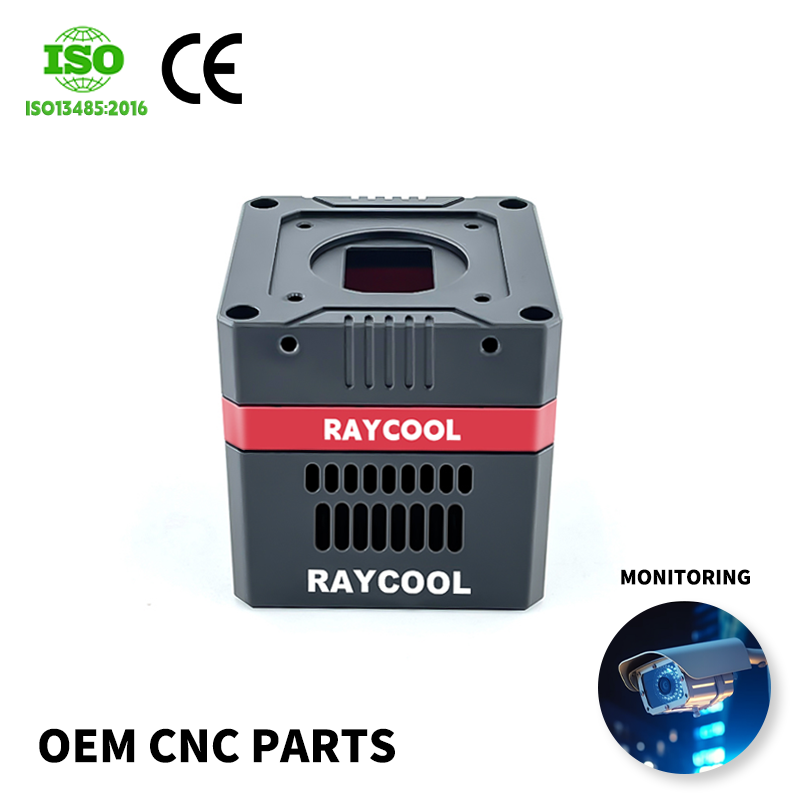
Low-volume orders present a unique challenge in modern industrial production, and CNC parts manufacturing has evolved to address this demand effectively. Unlike mass production environments where economies of scale dominate decision-making, low-volume CNC manufacturing requires flexibility, precision, and strategic resource allocation. Manufacturers must balance quality expectations with cost considerations while maintaining profitability on smaller production runs. Understanding how CNC parts manufacturing adapts to these constraints reveals the sophistication of contemporary precision engineering and the operational strategies that make low-volume production viable.
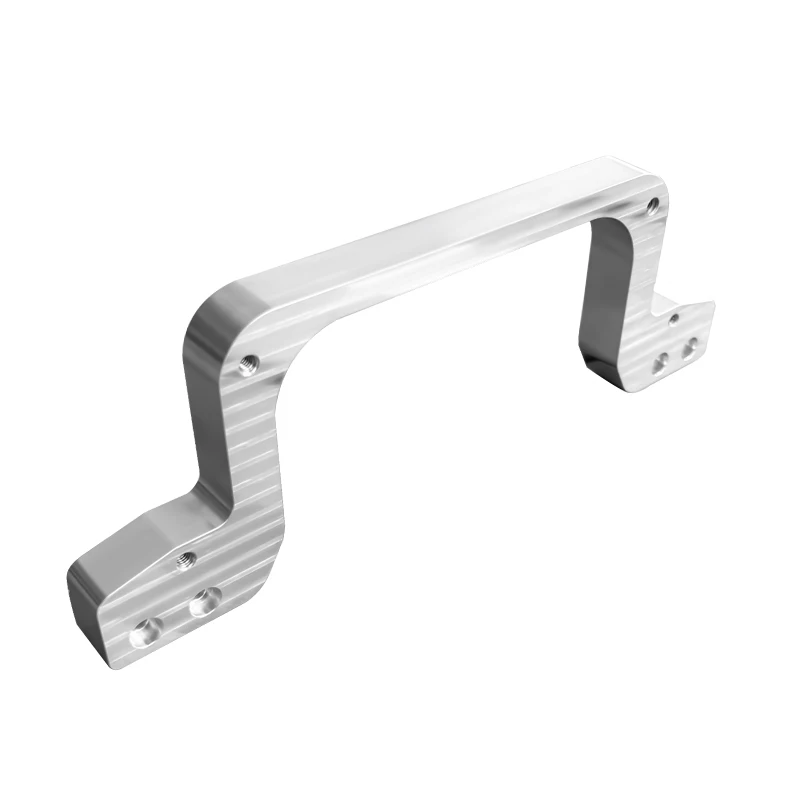
The adaptation of CNC parts manufacturing to low-volume orders involves rethinking traditional production workflows and embracing technologies that prioritize adaptability over repetitive throughput. Modern CNC facilities serving low-volume markets employ specialized programming techniques, flexible tooling systems, and rapid changeover protocols that would be unnecessary in high-volume environments. This specialized approach enables manufacturers to deliver precision components for industries ranging from aerospace to medical devices, where production volumes remain modest but quality standards remain uncompromising. The following sections explore the key mechanisms through which contemporary CNC parts manufacturing achieves efficiency, cost-effectiveness, and quality in low-volume scenarios.
Flexible Setup and Rapid Changeover Strategies
Minimizing Setup Time Through Advanced Planning
CNC parts manufacturing success in low-volume production begins with intelligent setup planning. Rather than investing in dedicated fixtures designed for single high-volume product runs, low-volume shops employ modular tooling systems and universal clamping mechanisms that accommodate various part geometries with minimal reconfiguration. Programmers invest time in optimizing tool paths and sequencing operations to minimize tool changes, reducing idle machine time. This upfront planning, supported by sophisticated CAM software, ensures that when a low-volume job enters the shop, the transition from previous work happens swiftly and efficiently.
Quick-Change Tooling Systems
Quick-change tooling represents one of the most significant operational innovations enabling CNC parts manufacturing to handle low-volume orders profitably. Traditional fixed-tooling approaches require extended changeover periods between different part specifications, which directly reduces the available machining time for each job. Modern CNC machines equipped with automatic tool changers and standardized quick-disconnect interfaces allow operators to swap entire tool sets in minutes rather than hours. This capability is essential for low-volume production because every hour saved on changeover translates directly to improved cost per part, making small batches economically viable even with existing overhead structures.
Adaptive Cost Management and Pricing Models
Machine Utilization Optimization
CNC parts manufacturing in low-volume environments requires careful management of machine utilization to maintain profitability. Since fixed costs such as facility overhead, equipment depreciation, and skilled labor remain constant regardless of production volume, the cost burden per unit increases dramatically with small batch sizes. Manufacturers address this challenge through mixed-job scheduling, where CNC parts manufacturing equipment runs different customer jobs sequentially, spreading overhead across multiple revenue sources. Additionally, many shops maintain specialized machines dedicated to quick-turnaround work, ensuring that low-volume orders do not disrupt higher-volume production streams while still being processed efficiently on appropriately configured equipment.
Value-Based Pricing and Transparency
Successful low-volume CNC parts manufacturing requires transparent pricing that reflects true production costs without penalizing customers excessively for smaller quantities. Rather than charging prohibitive per-unit premiums, sophisticated shops employ detailed cost accounting that separates fixed setup charges from variable per-piece machining costs. This model communicates clearly that low-volume orders incur legitimate additional expenses while allowing customers to understand cost drivers. Some CNC parts manufacturing operations offer tiered pricing that improves per-unit rates as order volumes increase, encouraging customers to consolidate orders while maintaining fairness for genuine low-volume applications. This approach builds customer trust and repeat business, which drives long-term viability in specialized low-volume markets.
Quality and Precision Without Compromise
Rigorous Process Control for Small Batches
Low-volume production runs cannot rely on statistical process control methods developed for high-volume manufacturing, where large sample sizes reveal trends in tool wear and machine drift. CNC parts manufacturing for small batches requires heightened attention to individual part quality, with statistical sampling replaced by first-article inspection, in-process dimensional verification, and comprehensive final inspection protocols. Machine operators and quality technicians work closely to monitor early parts in each production run, catching and correcting variations before defects propagate through the limited batch. This proactive approach is especially critical in aerospace, medical, and automotive sectors where even a single defective component can cascade into substantial problems for end customers.
Precision Verification and Documentation
CNC parts manufacturing shops serving low-volume markets invest heavily in precision measurement equipment and documentation systems that would be oversized for simpler applications. Coordinate measuring machines, laser measurement systems, and optical inspection devices allow technicians to verify complex geometries quickly and accurately. Comprehensive traveler documentation accompanies each low-volume production run, recording inspection results, machine settings, tool offsets, and any deviations from standard procedures. This meticulous record-keeping protects both manufacturer and customer by providing complete traceability and ensuring that quality standards remain consistent even when production volumes fluctuate. For industries subject to regulatory compliance, this documentation becomes essential evidence of manufacturing integrity.
FAQ
How does CNC parts manufacturing reduce costs for low-volume orders?
CNC parts manufacturing reduces low-volume costs through optimized setup planning, mixed-job scheduling, transparent pricing that separates fixed and variable expenses, and efficient tool management. By investing in modular tooling and quick-change systems, shops minimize changeover time and spread overhead across multiple customer projects rather than charging all fixed costs to a single small batch.
What quality standards does CNC parts manufacturing maintain for small batches?
CNC parts manufacturing maintains quality in low-volume production through first-article inspection, in-process dimensional verification, heightened final inspection protocols, and comprehensive documentation. Since statistical process control methods are impractical with small sample sizes, quality specialists employ direct measurement of each part and detailed record-keeping to ensure consistency and traceability.
Is CNC parts manufacturing suitable for urgent or prototype low-volume orders?
Yes, CNC parts manufacturing is well-suited to urgent or prototype low-volume orders because rapid changeover capabilities and flexible scheduling enable quick turnaround without expensive dedicated tooling. Experienced shops can accommodate prototype and small-batch work on short notice, making CNC machining ideal for product development, design verification, and initial market testing phases.