
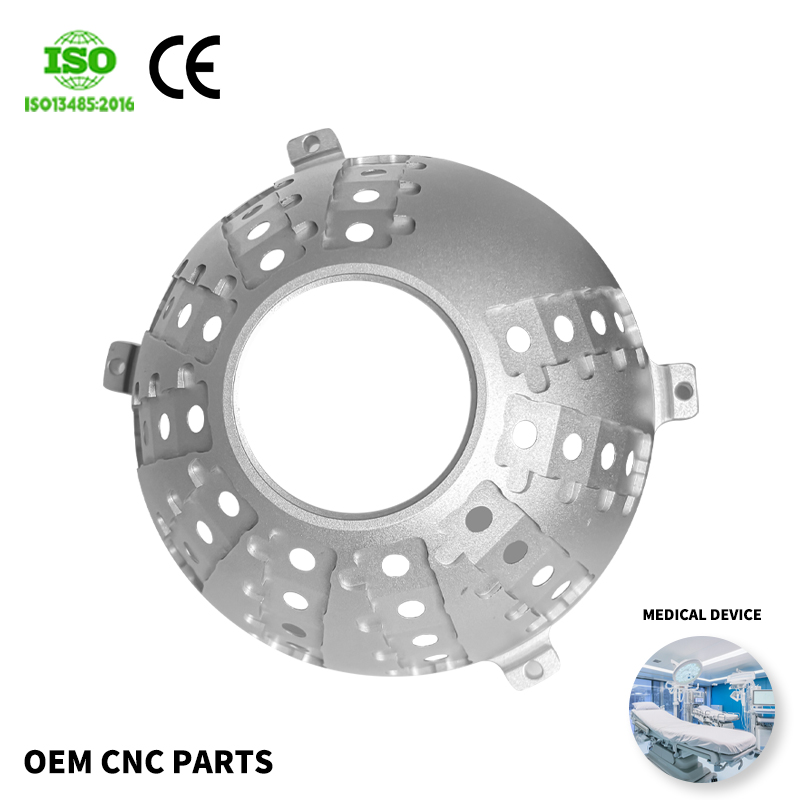
Modern robotics and automation systems demand exceptional precision, tight tolerances, and reliable component quality to function at peak performance. Industrial manufacturers, integrators, and equipment designers increasingly turn to specialized cnc milling services to produce the intricate parts that power their systems. Whether fabricating robotic arm joints, precision spindle housings, servo actuator bodies, or complex automation equipment components, cnc milling services deliver the dimensional accuracy and surface finish required by today's most demanding applications.
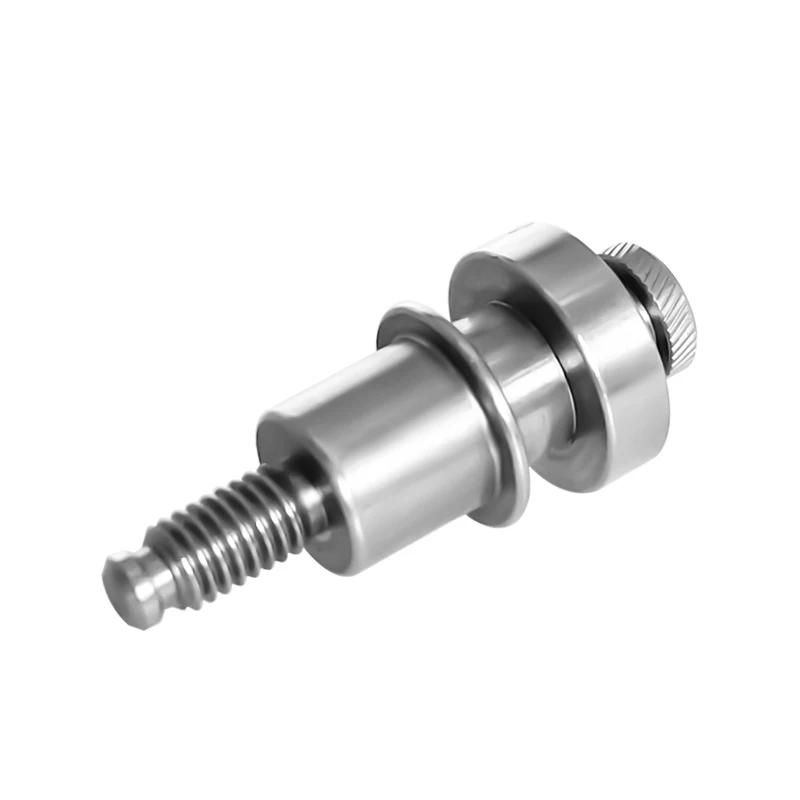
The integration of advanced cnc milling technology into manufacturing workflows has fundamentally transformed how automation engineers approach component design and production. With multi-axis machining capabilities, real-time adaptive control, and sophisticated toolpath optimization, cnc milling services enable manufacturers to reduce lead times, improve dimensional consistency, and minimize material waste. This operational efficiency directly supports faster product development cycles and more competitive pricing in the robotics sector.
Precision Requirements in Robotics Manufacturing
Why Tight Tolerances Matter for Automation Equipment
Robotics and automation systems operate under conditions that demand exceptional accuracy. When a collaborative robot arm moves through a 30-degree arc, even a 0.05-millimeter deviation in joint geometry can cascade into positioning errors that compromise end-effector accuracy. Cnc milling services address this challenge by delivering repeatable precision that maintains system performance over thousands of operating cycles. High-precision milled components also reduce assembly time, as parts fit together with minimal manual adjustment.
Material Selection and Surface Finish Requirements
Automation equipment operates in diverse industrial environments, from food processing lines to pharmaceutical manufacturing facilities. Cnc milling services support material choices including stainless steel, aluminum alloys, titanium, and engineered plastics, each selected for specific application demands. Surface finish quality directly impacts bearing performance, seal integrity, and corrosion resistance in long-running automation systems. Advanced cnc milling services incorporate finishing processes that achieve Ra values as low as 0.4 microinches, ensuring smooth operation and extended component lifespan.
Advanced Capabilities and Production Flexibility
Multi-Axis Machining for Complex Geometries
Modern robotics components rarely feature simple rectilinear shapes. Gear hubs, actuator casings, and transmission housings incorporate complex three-dimensional geometries that require sophisticated cnc milling capabilities. Five-axis and six-axis cnc milling centers enable production of intricate features in single setups, reducing datum errors and improving positional accuracy. This capability allows automation equipment manufacturers to design more compact, efficient components that were previously impossible to produce economically.
Production Volume Flexibility and Lead Time Optimization
Cnc milling services adapt seamlessly to production demands ranging from single prototypes to medium-volume production runs. Unlike dedicated tooling approaches that require significant upfront investment, cnc milling services offer rapid toolpath programming and immediate production startup. For robotics companies launching new equipment lines, this flexibility accelerates time-to-market while managing capital risk. Cnc milling also accommodates design iterations efficiently, supporting the rapid prototyping cycles essential in modern automation development.
Integration with Automation Manufacturing Workflows
Quality Assurance and Process Control
Contemporary cnc milling services incorporate integrated quality management systems that verify dimensional accuracy throughout production. Automated in-process gauging, SPC charting, and traceability documentation ensure every component meets specified requirements before leaving the facility. For mission-critical automation equipment, this quality documentation provides essential evidence of compliance with performance specifications. Cnc milling services also support specialized finishing operations including deburring, polishing, and coating application that enhance component performance and appearance.
Cost Efficiency and Material Optimization
Cnc milling services minimize material waste through optimized toolpaths that reduce chip generation and tool wear. Advanced cnc milling technology calculates optimal cutting speeds and feed rates for each material and feature type, extending tool life and reducing per-unit production costs. For robotics manufacturers managing tight margins in competitive markets, the cost savings from efficient cnc milling directly improve profitability. Additionally, cnc milling services eliminate traditional setup times associated with manual machining, further reducing manufacturing overhead.
FAQ
What types of robotics components benefit most from cnc milling services?
Cnc milling services excel for producing precision-critical components including joint housings, actuator bodies, gear carriers, spindle adapters, and transmission casings. Any automation equipment component requiring dimensional accuracy better than 0.01 inches, complex three-dimensional geometry, or specialized material properties is an ideal candidate for cnc milling services. These services also work well for components requiring multiple features machined in precise relationship to one another.
How do cnc milling services handle different production volumes?
Cnc milling services support single-piece custom components through medium-volume production runs without requiring dedicated tooling investment. For prototypes and low-volume work, cnc milling offers rapid turnaround with minimal setup costs. As production volume increases, cnc milling remains economically viable up to several thousand parts annually, after which transfer to dedicated manufacturing may become advantageous. This flexibility makes cnc milling services ideal for robotics companies at any growth stage.
What quality standards do cnc milling services typically support?
Modern cnc milling services routinely meet ISO 9001 quality management requirements and achieve dimensional tolerances to ISO 286 standards. Many facilities support additional certifications including ISO 13849 for functional safety and AS9100 aerospace standards. Cnc milling services can deliver surface finishes to specified Ra values, achieve straightness and parallelism within 0.0005 inches, and maintain positional accuracy across complex multi-feature components. Quality documentation and traceability records support compliance verification for regulated automation applications.