
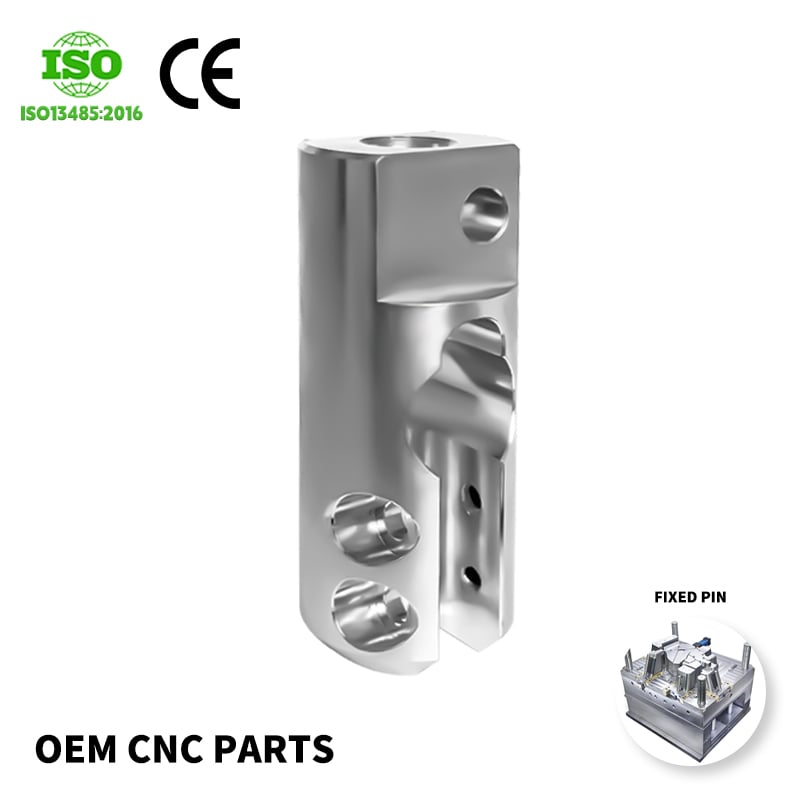
Product development demands precision, speed, and cost control. Custom CNC machining has become essential for engineers and manufacturers seeking to transform designs into functional prototypes and production parts without delays or quality compromises. Whether you are developing semiconductor equipment, automotive components, or industrial machinery, CNC machining capabilities directly impact your development timeline and final product performance.

The relationship between custom CNC machining and product development extends beyond simple part production. Modern development cycles require manufacturing partners who can iterate quickly, maintain tight tolerances, and scale from prototype runs to full production volumes. Custom machining services eliminate the need for expensive tooling investments during early stages, enabling teams to refine designs through real-world testing before committing to high-volume manufacturing approaches.
Accelerating Design Validation Through Rapid Prototyping
Speed Advantages in Iteration Cycles
Custom CNC machining dramatically reduces the time required to move from CAD design to physical prototype. Traditional methods requiring custom tooling or manual fabrication can take weeks; CNC machining can deliver precision parts within days. This speed advantage allows development teams to validate designs rapidly, identify functional issues early, and implement corrections without cascading schedule delays. Each iteration cycle completed faster means your product reaches market sooner and with fewer development surprises.
Precision Testing and Performance Validation
Prototypes must perform consistently to provide meaningful test data. Custom CNC machining delivers repeatable precision across multiple prototype iterations, ensuring that performance variations result from design choices rather than manufacturing inconsistencies. This consistency is critical for semiconductor equipment, aerospace components, and medical devices where tolerance stacks and functional clearances directly affect operational reliability. Testing confidence increases when you know manufacturing variability has been controlled.
Cost Management Across Development Phases
Eliminating Tooling Constraints in Early Development
Traditional manufacturing often requires significant tooling investments before production begins. Custom CNC machining operates without this barrier; setup occurs primarily in software, not in expensive dies or fixtures. Development teams can explore multiple design alternatives without financial penalties associated with tool changes. This flexibility means engineers optimize for performance and functionality rather than compromising designs to fit existing tooling constraints. Cost remains proportional to material and machine time, not to tooling complexity.
Scaling Economics from Prototype to Production
Custom CNC machining enables seamless scaling of successful designs from limited prototype runs to full production volumes. The same machines, toolpaths, and precision standards apply whether producing five units or five thousand units. This continuity prevents the performance degradation that sometimes occurs when designs transition to different manufacturing methods. Your production parts match prototype specifications exactly, reducing field failures and warranty complications that could delay market launch or damage reputation.
Material Flexibility and Design Innovation Support
Accommodating Advanced Material Selection
Modern product development increasingly involves advanced materials including aluminum alloys, stainless steels, titanium, and specialty polymers. Custom CNC machining accommodates diverse material properties without requiring specialized tooling changes. Engineers can test component performance across different material options, optimizing for thermal properties, weight, corrosion resistance, or cost depending on application requirements. This material flexibility supports informed decisions about material selection rather than forcing compromises based on manufacturing method limitations.
Supporting Complex Geometry and Integration
Product innovations often involve complex geometries, internal features, and tight spatial integration that manual machining cannot achieve efficiently. CNC machining excels at producing intricate profiles, precise holes, complex curves, and integrated features from solid material. Multi-axis CNC capabilities enable single-setup fabrication of components that would otherwise require multiple operations or assembly steps. This integration capability reduces part counts, assembly complexity, and potential failure points in your final product designs.
FAQ
How does custom CNC machining reduce product development risk?
Custom CNC machining reduces risk by enabling rapid design validation through fast prototyping, maintaining precision consistency that isolates design performance from manufacturing variability, and facilitating cost-effective design iteration before committing to high-volume manufacturing. Testing prototypes manufactured with production-equivalent precision reveals real functional issues rather than manufacturing artifacts, allowing confident design refinement decisions.
Can custom CNC machining support both prototype and production manufacturing?
Yes, custom CNC machining seamlessly supports both phases. The same machines, toolpaths, and quality standards apply whether producing five prototype units or five thousand production units. This continuity ensures production parts match prototype specifications exactly, eliminating the performance surprises that often occur when designs transition to different manufacturing methods, and supporting confident market launch with proven designs.
What materials can custom CNC machining accommodate?
Custom CNC machining accommodates virtually all machinable materials including aluminum alloys, stainless steels, titanium, brass, copper, and engineering polymers. Engineers can test component performance across different material options to optimize for thermal properties, weight, corrosion resistance, or cost depending on application requirements, enabling informed material selection decisions during development phases.