
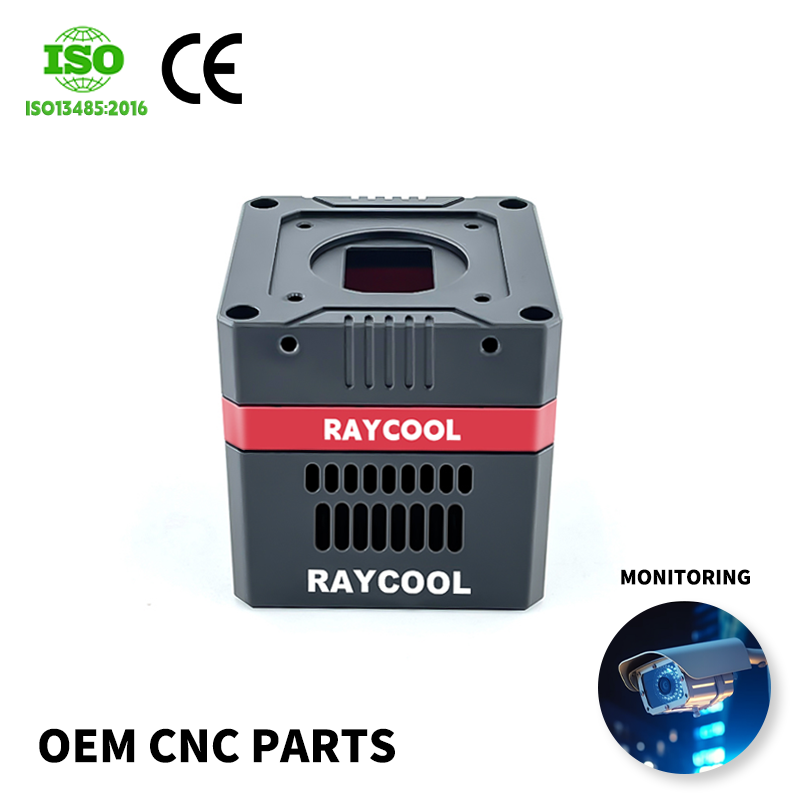
Selecting the right custom CNC machining process requires understanding how different techniques handle geometric complexity, material demands, and production timelines. Modern manufacturing relies on precision tooling to transform raw materials into components that meet tight tolerances and functional requirements. For engineers and procurement managers evaluating production capabilities, the choice between turning, milling, multi-axis machining, and hybrid approaches directly impacts cost, quality, and delivery schedules.

Complex parts demand careful analysis of geometry, material properties, and surface finish specifications before committing to a machining strategy. Each custom CNC machining method excels under different conditions, and the optimal choice depends on part topology, batch volume, and required tolerances. Understanding when to apply turning versus milling versus multi-axis simultaneous cutting separates efficient programs from costly delays.
Turning and Single-Axis Rotation for Cylindrical Geometries
Rotational Symmetry and High-Speed Production
Turning operations rotate a workpiece against a fixed cutting tool to produce cylindrical features, tapers, and axial profiles. This custom CNC machining method excels when parts exhibit rotational symmetry or require long, uniform diameters. Aerospace shafts, hydraulic sleeves, and automotive spindles frequently demand turning because the process delivers consistent surface finishes and rapid material removal rates. Single-axis rotation simplifies fixturing, reduces tool deflection, and enables high spindle speeds on ductile materials like aluminum and steel alloys.
Threading, grooves, and step diameters integrate seamlessly into turning programs, making it ideal for shaft-like geometries. When custom CNC machining applies turning to batches of identical components, cycle times remain predictable and labor overhead drops significantly. The technique handles interrupted cuts poorly and struggles with off-center features, so design engineers must evaluate whether turning alone satisfies part requirements.
Material Flow and Tool Life Efficiency
Ductile metals respond exceptionally well to turning because chips form continuous ribbons and evacuate cleanly from the cutting zone. Brittle materials like cast iron and composites generate discontinuous chips that may scratch finished surfaces, requiring slower feeds and specialized tool geometry. Custom CNC machining operations on difficult-to-cut superalloys demand rigid setup and frequent tool changes to maintain dimensional accuracy. Coolant strategy directly influences tool life; flood cooling extends edge durability, while minimum-quantity lubrication reduces environmental burden and post-machining cleanup.
Milling for Prismatic Complexity and Multi-Face Machining
Three-Axis Milling and Flat Surface Production
Milling removes material using rotating cutting tools that traverse orthogonal axes to produce flat faces, pockets, slots, and rectangular profiles. This custom CNC machining process dominates industrial boxes, mounting blocks, and enclosures where orthogonal geometry predominates. Three-axis machines move the tool in X, Y, and Z directions while the workpiece remains stationary, enabling rapid setup changes and part repositioning between machining operations. Engineers favor milling for low-to-medium volume jobs because programming flexibility outweighs spindle speed trade-offs versus turning.
Pocket depth, wall thickness, and corner radius constraints require careful tool path optimization to avoid unnecessary rapid movements and tool wear. Custom CNC machining planners must select appropriate tool diameters and step-over distances to balance cycle time against surface finish quality. Interrupted cuts inherent to milling generate higher cutting forces, necessitating robust machine spindles and secure workholding to prevent chatter and positional errors.
Efficiency Across Production Volumes
Low-volume prototype runs and one-off custom CNC machining jobs benefit from milling because setup flexibility permits design iterations without substantial re-engineering. Medium-volume production leverages milling economics when batch quantities justify modest tooling investment but not dedicated turning operations. Programmable tool changers reduce non-cutting time, and aggressive feeds on aluminum materials offset the inherent speed disadvantage compared to turning's rotational approach.
Multi-Axis and Simultaneous Five-Axis Machining for Compound Geometry
Advanced Part Complexity and Simultaneous Surface Generation
Five-axis simultaneous machining tilts the cutting tool in multiple planes while moving the workpiece, enabling complex sculptured surfaces, undercuts, and compound angles within single setups. This custom CNC machining capability eliminates intermediate fixtures and repositioning steps, dramatically improving accuracy on aerospace fasteners, medical implants, and hydraulic valve bodies. Simultaneous five-axis cutting reduces part cycle time and scrap rates because the machine orients the tool optimally throughout the cut, minimizing tool deflection and chatter. Real-time tool path compensation maintains consistent surface finish across varying cutting angles and depths.
Custom CNC machining engineers select five-axis methodology when prismatic milling cannot access all required surfaces, or when rotational symmetry breaks down due to off-center pockets, angled mounting bosses, or blended freeform contours. The investment in five-axis programming and machine capability pays dividends on repeat production because consistent part quality reduces rework and scrap loss. Carbide tool cost increases due to higher cutting speeds and specialized geometries, yet overall per-piece economics often improve through consolidated setup operations.
Programming Complexity and Operational Considerations
Five-axis custom CNC machining demands sophisticated CAM software and skilled programmers who understand simultaneous tool motion, collision avoidance, and kinematics compensation. Machine tool dynamics require rigorous spindle speeds and feed rates to prevent thermal growth and positional drift. Custom CNC machining shops investing in five-axis capability typically reserve it for higher-margin work where geometric complexity justifies extended programming time and premium operator expertise.
FAQ
When should we choose turning over milling for custom CNC machining?
Select turning for components with rotational symmetry, long continuous diameters, or high-volume cylindrical production. Turning delivers faster material removal rates and smoother surface finishes on shaft-like geometries. However, if the part requires off-center pockets, rectangular features, or complex prismatic sections, custom CNC machining through milling becomes necessary. Evaluate part topology first; if rotational symmetry dominates, turning economics win.
What makes five-axis custom CNC machining cost-effective for complex parts?
Five-axis custom CNC machining consolidates multiple setups into single operations, reducing fixture costs, handling time, and positional errors. Complex aerospace and medical components manufactured in batch quantities benefit from this efficiency because the machine generates surfaces that prismatic three-axis milling cannot access without intermediate repositioning. Programming investment amortizes across repeated production runs, making five-axis economical for repeat geometries with sculptured or undercut features.
How do material properties influence custom CNC machining process selection?
Ductile materials like aluminum and soft steel favor high-speed turning and milling because chips evacuate cleanly and tool life remains predictable. Brittle materials like cast iron and composites demand slower feeds and specialized tools, sometimes favoring turning over milling to maintain surface quality. Difficult-to-cut superalloys and stainless steel require rigid setups and advanced coolant strategies regardless of process choice. Material hardness, chip formation behavior, and thermal stability directly shape the optimal custom CNC machining approach for your application.