
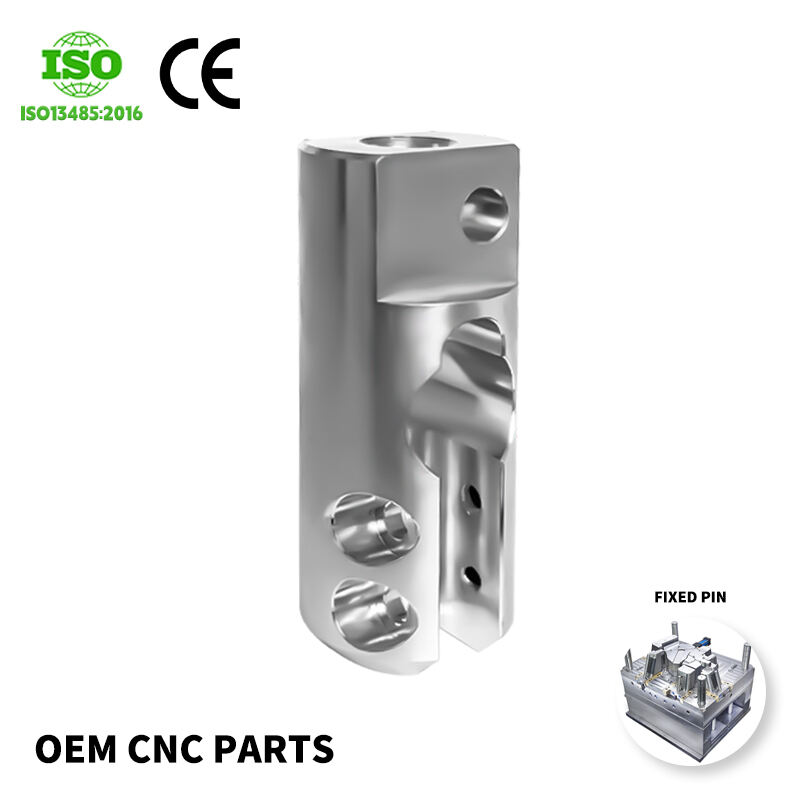
CNC processing stainless steel has become a cornerstone of modern manufacturing, offering unprecedented precision and repeatability for critical components across industries. From aerospace applications to medical devices, stainless steel's corrosion resistance and mechanical properties make it an ideal material choice, though machining it presents unique challenges that require specialized knowledge and techniques. Understanding the intricacies of stainless steel machining is essential for manufacturers seeking to optimize their production processes while maintaining the highest quality standards.
Material Properties and Grade Selection
Understanding Stainless Steel Characteristics
Stainless steel exhibits unique metallurgical properties that directly impact machining operations. The material's work hardening tendency means that improper cutting parameters can create a hardened surface layer that becomes extremely difficult to machine in subsequent operations. This characteristic requires careful attention to cutting speeds, feeds, and tool selection to prevent work hardening while maintaining dimensional accuracy.
The austenitic structure of common grades like 304 and 316 provides excellent corrosion resistance but presents challenges in chip formation and heat dissipation during machining. These grades tend to produce long, stringy chips that can wrap around cutting tools and workpieces, potentially causing surface damage or dimensional variations. Understanding these material behaviors is crucial for successful CNC processing stainless steel operations.
Grade-Specific Machining Considerations
Different stainless steel grades require tailored machining approaches based on their chemical composition and microstructure. Martensitic grades like 410 and 420 offer better machinability than austenitic grades but may require heat treatment considerations. Ferritic grades such as 430 provide moderate machinability while maintaining cost-effectiveness for less demanding applications.
Precipitation hardening grades like 17-4 PH present unique challenges due to their variable hardness depending on heat treatment condition. These materials may require different cutting parameters at different stages of processing, particularly when machining occurs before and after aging treatments. Selecting the appropriate grade for specific applications involves balancing material properties, machinability requirements, and end-use performance criteria.
Cutting Tool Selection and Optimization
Tool Material and Geometry Considerations
Carbide tools with appropriate coatings represent the optimal choice for most CNC processing stainless steel applications. TiAlN coatings provide excellent heat resistance and reduced adhesion, helping to prevent built-up edge formation that commonly occurs when machining stainless steel. The coating selection should match the specific cutting conditions and material grade being machined.
Tool geometry plays a critical role in successful stainless steel machining. Positive rake angles help reduce cutting forces and heat generation, while sharp cutting edges minimize work hardening tendencies. However, edge preparation must balance sharpness with durability to prevent premature tool failure. Chip breaker geometry becomes particularly important for controlling the long, stringy chips characteristic of stainless steel machining.
Tool Life and Performance Optimization
Monitoring tool wear patterns provides valuable insights for optimizing cutting parameters and tool selection. Flank wear typically dominates in stainless steel machining, though crater wear can become significant at higher cutting speeds. Understanding these wear mechanisms allows for predictive tool replacement schedules that minimize unplanned downtime while maintaining part quality.
Tool life can be significantly extended through proper cutting fluid application and parameter optimization. The balance between cutting speed and feed rate affects both tool life and surface finish quality. Higher feed rates with moderate cutting speeds often provide better results than high-speed, low-feed approaches when machining stainless steel components.
Cutting Parameters and Process Control
Speed and Feed Optimization
Establishing optimal cutting parameters for stainless steel requires understanding the relationship between material removal rate, surface finish, and tool life. Lower cutting speeds with higher feed rates typically prevent work hardening while maintaining acceptable surface finishes. This approach contrasts with strategies used for other materials and requires careful parameter development.
Depth of cut considerations become critical when planning multi-pass operations. Shallow cuts may promote work hardening due to rubbing rather than cutting action, while excessive depth of cut can generate excessive heat and cutting forces. Finding the optimal balance requires consideration of part geometry, machine capability, and tooling limitations.
Heat Management and Cooling Strategies
Effective heat management is essential for successful CNC processing stainless steel operations. The material's relatively low thermal conductivity means that heat builds up in the cutting zone, potentially causing work hardening, dimensional distortion, and accelerated tool wear. Flood cooling with high-pressure, high-volume cutting fluid application helps remove heat and flush chips from the cutting zone.
Cutting fluid selection impacts both cooling effectiveness and machining performance. Water-soluble coolants provide excellent heat removal but may require corrosion inhibitors when machining stainless steel. Synthetic coolants offer good cooling properties with extended sump life, while oil-based coolants provide superior lubrication for finishing operations where surface finish is critical.
Surface Finish and Quality Control
Achieving Required Surface Specifications
Surface finish requirements in stainless steel components often drive machining strategy selection. The material's tendency to work harden means that achieving fine surface finishes requires consistent cutting action without rubbing or chattering. Tool path programming must account for these requirements, particularly in finishing operations where surface quality is paramount.
Conventional vs. climb milling considerations become important for surface finish optimization. Climb milling generally produces better surface finishes in stainless steel but requires rigid machine setups and proper backlash compensation. The choice between these strategies depends on machine capability, part geometry, and surface finish requirements.
Dimensional Accuracy and Tolerance Control
Maintaining tight tolerances when machining stainless steel requires attention to thermal effects and work hardening prevention. The material's coefficient of thermal expansion means that temperature variations during machining can affect dimensional accuracy. Consistent cooling and controlled cutting parameters help minimize these effects while maintaining dimensional stability.
Fixture design considerations become critical for maintaining dimensional accuracy throughout the machining process. Stainless steel's work hardening characteristics mean that clamping forces and fixture contact points must be carefully designed to prevent distortion while providing adequate workpiece restraint. Proper fixture design also facilitates consistent cooling fluid application to critical cutting zones.
Common Challenges and Solutions
Work Hardening Prevention and Management
Work hardening represents one of the most significant challenges in CNC processing stainless steel components. This phenomenon occurs when cutting parameters allow the material to deform plastically without proper chip formation, creating a hardened surface layer that resists subsequent machining operations. Prevention requires maintaining constant cutting action with appropriate feed rates and sharp cutting tools.
When work hardening does occur, recovery strategies may involve annealing treatments or modified cutting approaches using ceramic or CBN tools capable of machining hardened materials. However, prevention remains more cost-effective than remediation, emphasizing the importance of proper initial parameter selection and process control throughout the machining operation.
Chip Control and Evacuation
The stringy, continuous chips produced during stainless steel machining pose significant challenges for automated operations. These chips can wrap around cutting tools, scratch finished surfaces, or interfere with cooling fluid flow. Effective chip control strategies include optimized tool geometry, appropriate cutting parameters, and enhanced chip evacuation systems.
High-pressure cutting fluid application helps break up long chips and evacuate them from the cutting zone. Tool path programming can also contribute to chip control by incorporating chip-breaking moves or optimized entry and exit strategies that minimize chip formation issues. Regular monitoring and adjustment of these factors ensures consistent part quality and reduces operator intervention requirements.
FAQ
What are the most critical cutting parameters for stainless steel machining?
The most critical parameters include maintaining adequate feed rates to prevent work hardening, using appropriate cutting speeds based on material grade and tooling, and ensuring sufficient depth of cut to achieve proper chip formation. Feed rate is particularly important as too low a feed can cause rubbing and work hardening, while excessive feed rates can overload tools and cause poor surface finishes.
How do I prevent work hardening when machining stainless steel components?
Work hardening prevention requires maintaining constant cutting action with sharp tools, adequate feed rates, and appropriate cutting speeds. Never allow tools to rub or dwell on the workpiece surface, ensure consistent chip formation throughout the cut, and maintain proper cooling to minimize heat buildup. Using positive rake angle tools and avoiding interrupted cuts when possible also helps prevent work hardening.
What cutting fluid considerations are important for stainless steel machining?
Effective cutting fluid application requires high-pressure, high-volume delivery to remove heat and flush chips from the cutting zone. Water-soluble coolants provide excellent cooling but may require corrosion inhibitors, while synthetic coolants offer good performance with extended sump life. The cutting fluid must also provide adequate lubrication to prevent built-up edge formation on cutting tools.
How does stainless steel grade selection impact machining strategy?
Different stainless steel grades require tailored machining approaches based on their microstructure and properties. Austenitic grades like 304 and 316 are more prone to work hardening and require careful parameter control, while martensitic grades offer better machinability but may need heat treatment considerations. Precipitation hardening grades may require different parameters at various stages of processing depending on their heat treatment condition.