
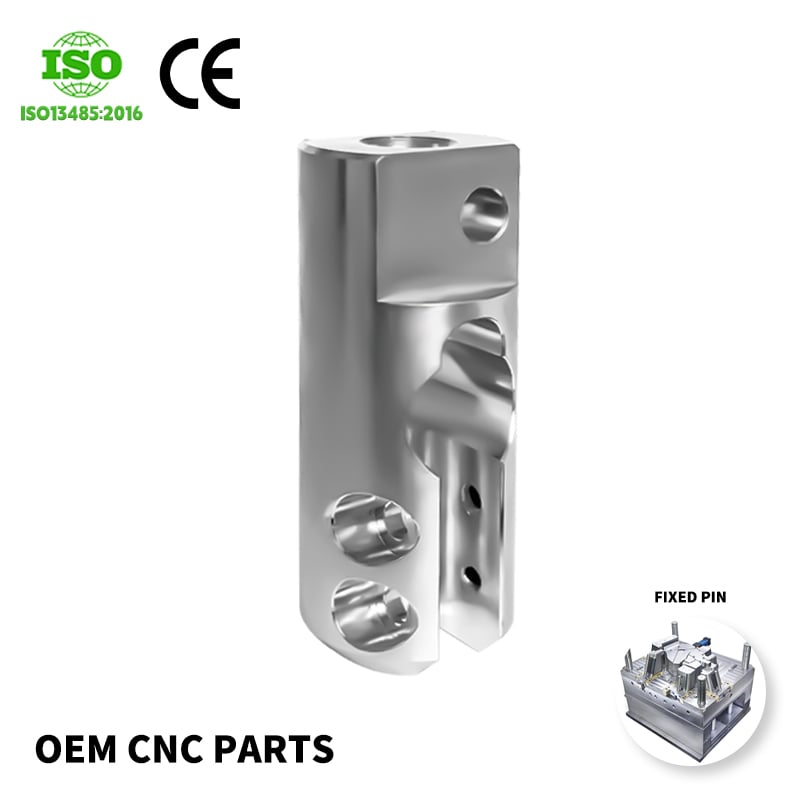
Selecting the right cnc machining services depends fundamentally on your production volume requirements. Whether you are manufacturing prototype components or scaling to thousands of units annually, the approach to CNC machining differs significantly in tooling strategy, cost structure, lead time, and quality protocols. Understanding these distinctions prevents costly decisions and ensures your manufacturing partner aligns with your business objectives.
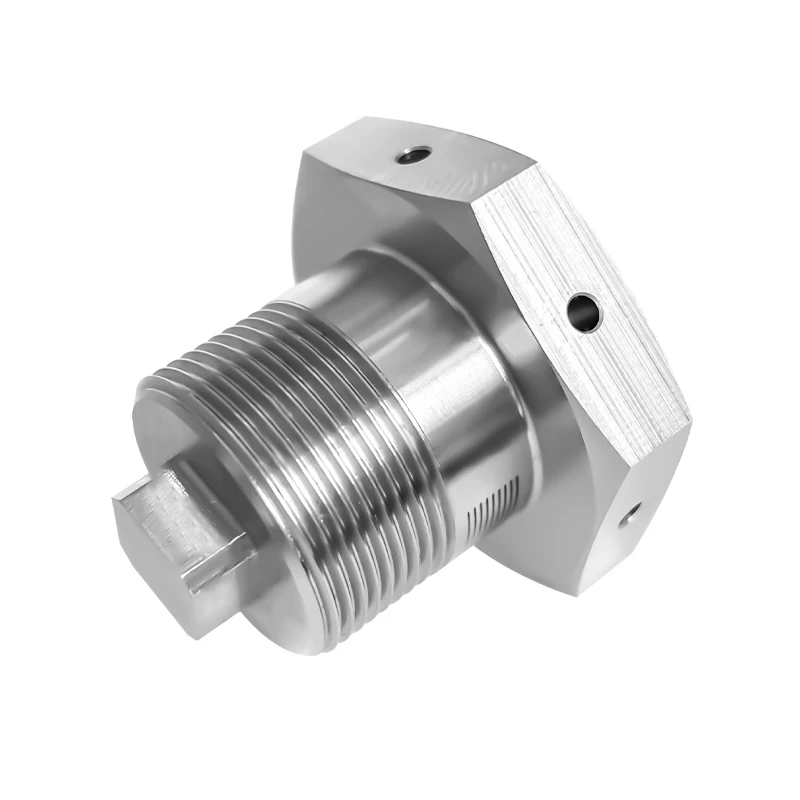
The manufacturing landscape has evolved to support both small-batch custom work and high-volume production through specialized CNC machining services. Low-volume runs demand flexibility, rapid iteration, and willingness to absorb higher per-unit costs, while high-volume production prioritizes process standardization, tooling optimization, and economies of scale. Determining which model fits your business requires honest assessment of your current needs and growth trajectory.
Understanding Low-Volume CNC Machining Services
Characteristics and Applications
Low-volume CNC machining services typically handle runs from one to a few hundred parts. These operations prioritize flexibility over cost optimization. Manufacturers working with low-volume orders adjust setups frequently, change tool paths between jobs, and adapt to design modifications without penalty. This agility makes CNC machining services attractive for product development, custom components, and specialty applications where demand is unpredictable or intentionally limited.
Industries relying on low-volume CNC machining services include aerospace component suppliers, medical device prototyping, industrial equipment customization, and specialty machinery manufacturers. Engineers value the ability to test design iterations, validate material performance, and produce initial production runs without committing to expensive tooling investments. The per-unit cost remains higher, but total project investment stays manageable.
Cost Structure and Timeline
Low-volume CNC machining services operate on a different economics model than high-volume production. Setup costs, programming time, and operator oversight represent larger portions of total cost per unit. Machine time allocation is less constrained, allowing operators to prioritize quality and accuracy over throughput. Lead times typically range from one to four weeks depending on design complexity and shop capacity, making these CNC machining services suitable for projects with reasonable schedule flexibility.
Material waste tends to be higher in low-volume runs because fixturing and setup are designed for flexibility rather than material conservation. Manufacturers absorb these inefficiencies as part of the service cost model. Quality expectations remain stringent, but inspection protocols emphasize dimensional accuracy and surface finish rather than statistical process control tied to high-volume yield targets.
High-Volume CNC Machining Services and Production Optimization
Manufacturing Scale and Efficiency
High-volume CNC machining services begin where production requirements exceed 1,000 to 5,000 units annually, depending on part complexity and industry standards. At this scale, manufacturers invest in dedicated tooling, optimized fixtures, and multi-axis machine configurations that reduce cycle time and improve repeatability. CNC machining services providers develop standardized work instructions, validate tool paths through production runs, and establish quality baselines that support consistent output.
The business case for high-volume CNC machining services justifies upfront engineering investment because unit costs decline significantly as volume scales. Manufacturers can absorb tooling costs across thousands of parts, distribute setup time across longer production runs, and leverage bulk material purchasing discounts. Lead times compress because CNC machining services providers schedule dedicated machine blocks and prioritize process efficiency over design flexibility.
Process Standardization and Quality Systems
High-volume CNC machining services require rigorous process documentation and quality assurance frameworks. Manufacturers implement statistical process control, first-piece inspection protocols, and periodic tool monitoring to maintain dimensional consistency across large batches. CNC machining services providers at this scale typically hold ISO 9001 certification or equivalent quality management systems that provide audit trails and traceability for every production lot.
Tooling strategy becomes critical in high-volume CNC machining services. Manufacturers select tool materials, coatings, and geometries that maximize tool life while maintaining tight tolerances. Feed rates and spindle speeds are optimized through production runs rather than guessed from standard charts. This scientific approach to CNC machining services reduces scrap rates, minimizes rework, and delivers predictable cost per unit that supports accurate pricing and margin forecasting.
Selecting the Right CNC Machining Services Model for Your Business
Volume Inflection Points and Transition Strategy
Most manufacturing businesses transition from low-volume to high-volume CNC machining services at specific inflection points. Initial adoption of low-volume CNC machining services allows market validation and design refinement without financial overcommitment. As demand stabilizes and volume forecasts become confident, switching to high-volume CNC machining services reduces per-unit cost and improves delivery predictability. Timing this transition requires collaboration between engineering, sales, and operations to avoid stranded tooling investments or unexpected cost jumps.
Strategic CNC machining services providers offer both capabilities within their operation, allowing customers to scale production without switching manufacturers. This continuity protects intellectual property, maintains quality consistency, and simplifies logistics. Providers experienced in supporting both low-volume and high-volume CNC machining services understand the transition mechanics and can advise on optimal timing based on actual demand patterns and competitive positioning.
Decision Framework for Volume Selection
Evaluating which CNC machining services model fits your needs requires analyzing multiple factors beyond volume count. Consider design maturity: prototype and validation work benefits from low-volume CNC machining services flexibility, while stable production designs justify high-volume tooling investment. Assess demand volatility: products with predictable order patterns support high-volume CNC machining services commitments, while intermittent or seasonal demand aligns with low-volume flexibility. Evaluate your competitive positioning: cost-sensitive markets demand high-volume CNC machining services optimization, while specialized or performance-critical applications support low-volume service models.
Material selection also influences CNC machining services model choice. Standard materials like aluminum and stainless steel work well in both low-volume and high-volume CNC machining services environments, while exotic alloys or complex geometries may require specialized expertise that limits provider options. Supply chain risk, regulatory compliance requirements, and geographic proximity to customers further shape the optimal CNC machining services approach for your business.
FAQ
At what volume threshold should we transition from low-volume to high-volume CNC machining services?
The inflection point typically occurs between 1,000 and 5,000 annual units, depending on part complexity and tooling requirements. Simple parts with straightforward geometry may justify high-volume CNC machining services at lower volumes, while complex multi-axis components require higher volume to amortize specialized tooling. Work with your CNC machining services provider to model cost curves and identify the volume where high-volume operations become more economical than continued low-volume production.
How do lead times differ between low-volume and high-volume CNC machining services?
Low-volume CNC machining services typically require one to four weeks from order to delivery, reflecting scheduling flexibility and per-job programming. High-volume CNC machining services often compress lead times to one to two weeks through dedicated machine blocks and standardized processes. However, initial orders requiring custom tooling for high-volume CNC machining services may require longer setup periods before production begins. Discuss specific lead time commitments with potential providers early in the selection process.
Can a CNC machining services provider handle both low-volume and high-volume production?
Yes, experienced CNC machining services providers operate mixed portfolios serving both volume segments simultaneously. They maintain flexible capacity for low-volume custom work while dedicating specific machines and personnel to high-volume production runs. This diversity strengthens business resilience and allows customers to grow within a single provider relationship. However, verify that your CNC machining services provider has genuine expertise in both models rather than treating one as secondary capacity.