
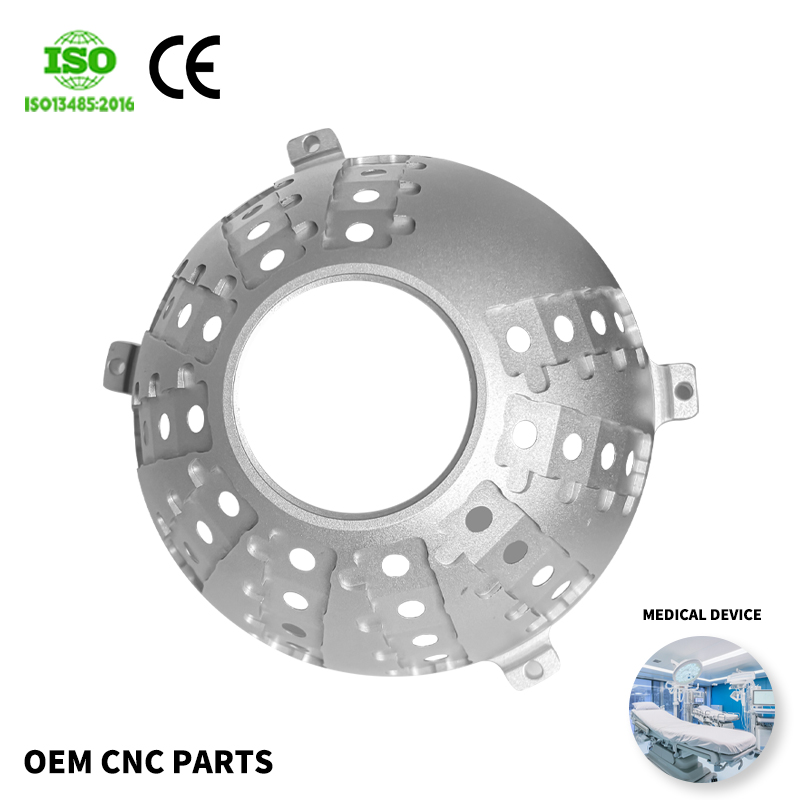
Selecting the right manufacturing approach for complex parts requires careful consideration of multiple technical and operational factors. 5 axis CNC machining has become a critical solution for industries demanding precision, speed, and capability in producing intricate geometries that traditional machining cannot efficiently address. Understanding when and how to leverage this technology directly impacts project timelines, costs, and final component quality.

The decision to implement 5 axis CNC machining extends beyond simple part complexity. Engineering teams must evaluate design requirements, material compatibility, volume constraints, tolerance specifications, and supplier capabilities before committing to this advanced manufacturing method. This comprehensive guide walks you through the essential selection criteria and helps you determine whether 5 axis CNC machining is the optimal choice for your specific application.
Understanding 5 Axis CNC Machining Capabilities
Core Technical Capabilities and Design Freedom
5 axis CNC machining operates with simultaneous movement across five axes: three linear axes (X, Y, Z) and two rotational axes. This simultaneous motion capability enables manufacturers to access and machine multiple surfaces of a component in a single setup, eliminating the need for multiple repositioning cycles. For complex parts requiring intricate internal features, undercuts, and angular surfaces, 5 axis CNC machining dramatically reduces setup time and improves dimensional accuracy compared to three-axis alternatives.
The advantage of 5 axis CNC machining extends to surface finish quality and tool utilization efficiency. Because the cutting tool can approach workpieces from nearly any angle, manufacturers achieve superior surface finishes and minimize tool deflection during high-speed cutting operations. This geometric flexibility proves invaluable in aerospace, medical device, and automotive sectors where design complexity and precision intersect.
Material and Industry Application Scope
5 axis CNC machining accommodates a diverse range of engineering materials including aluminum, steel, stainless steel, titanium, and composite materials. Each material presents distinct challenges related to tool wear, heat generation, and cutting forces, but advanced 5 axis machines equipped with proper coolant systems and tool strategies can efficiently process these variations. The versatility of 5 axis CNC machining makes it particularly suitable for prototype development, low-to-medium production volumes, and high-tolerance applications where design iteration and precision matter equally.
Evaluating Design and Part Complexity Requirements
Geometric Complexity Assessment
Begin your selection process by thoroughly analyzing your part geometry. Parts requiring undercuts, internal cavities, angled surfaces, or multi-directional features are primary candidates for 5 axis CNC machining. If your design includes features that cannot be accessed from a single directional approach using conventional three-axis machines, 5 axis CNC machining becomes not just advantageous but potentially necessary. Review your CAD model for angles, draft requirements, and accessibility constraints that would necessitate part repositioning in traditional machining scenarios.
Evaluate whether your part design has already been optimized for traditional machining or whether it represents a design that truly requires advanced capabilities. Some parts appear complex but can still be manufactured effectively using simpler methods with additional fixtures or secondary operations. Conversely, genuinely intricate geometries benefit dramatically from 5 axis CNC machining's capability to complete more work in fewer setups, thereby improving accuracy and reducing manufacturing risk.
Tolerance and Surface Finish Specifications
Tolerance requirements directly influence whether 5 axis CNC machining is justified economically. Ultra-tight tolerances, particularly those on multiple surfaces or features that require simultaneous precision, favor 5 axis approaches. Similarly, complex surface finish specifications and functional surfaces with tight Ra values (roughness average) benefit from 5 axis CNC machining's superior tool control and reduced vibration characteristics.
Assessing Production Volume and Cost Economics
Volume Thresholds and Setup Considerations
Production volume fundamentally shapes the decision framework for 5 axis CNC machining selection. One-off prototypes and low-volume production runs (typically under 500 units) often justify 5 axis CNC machining because setup efficiency and reduced secondary operations offset higher machine rates. Medium-volume production (500 to 10,000 units) requires careful cost-benefit analysis comparing single-setup 5 axis machining against multi-setup conventional approaches.
High-volume production sometimes shifts favorability toward dedicated tooling and simpler machines, but this depends entirely on part geometry and design optimization potential. Some high-volume parts still benefit from 5 axis CNC machining because single-setup efficiency and superior surface finish reduce or eliminate downstream finishing operations. Calculate total cost per unit including machining time, tool changes, setup labor, secondary operations, and material waste when comparing 5 axis CNC machining against alternative manufacturing methods.
Supplier Capability and Lead Time Impact
Not all machine shops possess equally capable 5 axis CNC equipment. When evaluating suppliers, assess their equipment specifications, spindle speed ratings, load capacity, and control software sophistication. Advanced 5 axis CNC machining requires experienced programmers and operators who understand complex tool path generation and machine optimization. A supplier with limited 5 axis experience may struggle with your complex parts, resulting in longer lead times, higher scrap rates, or dimensional challenges.
Lead time for 5 axis CNC machining typically exceeds conventional machining because programming complexity, setup verification, and first-piece inspection require additional attention. For time-critical applications, this factor must influence your selection decision. Conversely, if design modifications or iterations are anticipated, 5 axis CNC machining's flexibility regarding setup changes often accelerates overall project schedules despite longer initial lead times.
Decision Framework and Selection Criteria
Comparative Analysis Methodology
Develop a structured comparison by obtaining quotes from qualified suppliers for your part using both 5 axis CNC machining and conventional manufacturing approaches. Request detailed breakdowns including programming time, setup labor, machine time, tool costs, and estimated scrap rates. Compare total unit costs across different volume scenarios, not just the headline per-piece rate. Include secondary operations like deburring, hand finishing, or post-machine polishing in your analysis, as 5 axis CNC machining often reduces or eliminates these tasks.
Risk and Quality Assurance Factors
5 axis CNC machining generally reduces manufacturing risk for complex parts because fewer setups mean fewer opportunities for dimensional drift or fixture-induced errors. However, it introduces programmer and equipment reliability dependencies. Verify that your supplier maintains preventive maintenance schedules, possesses qualified programmers with relevant industry experience, and implements rigorous first-article inspection protocols. Request detailed specification sheets for the specific 5 axis machines that will produce your parts, including spindle specifications, accuracy ratings, and repeatability tolerances.
FAQ
When should I definitely choose 5 axis CNC machining over conventional methods?
Choose 5 axis CNC machining when your part includes features inaccessible from a single approach, demands ultra-tight tolerances across multiple surfaces, requires superior surface finish on complex geometries, or benefits from single-setup efficiency. Prototype and low-volume production runs particularly favor 5 axis CNC machining because setup overhead is amortized across fewer parts, making the per-unit economics highly competitive compared to traditional multi-setup approaches.
How does material choice affect 5 axis CNC machining selection?
5 axis CNC machining accommodates aluminum, steel, stainless steel, titanium, and many composites effectively. Harder materials like titanium benefit significantly from 5 axis CNC machining's superior tool control and reduced tool deflection, which minimizes surface damage and improves dimensional consistency. Aluminum parts may be cheaper with conventional methods unless geometric complexity or tolerance requirements drive adoption of 5 axis technology.
What questions should I ask suppliers regarding their 5 axis CNC machining capabilities?
Ask about specific machine models and their accuracy ratings, programmer qualifications and relevant industry experience, typical lead times for parts similar to yours, quality assurance processes and inspection capabilities, tooling strategies for your specific materials, and references from customers with comparable part complexity. Request detailed quotes including programming time and setup labor breakdowns, and inquire whether they offer design for manufacturability consultation to optimize your parts for their specific equipment.