
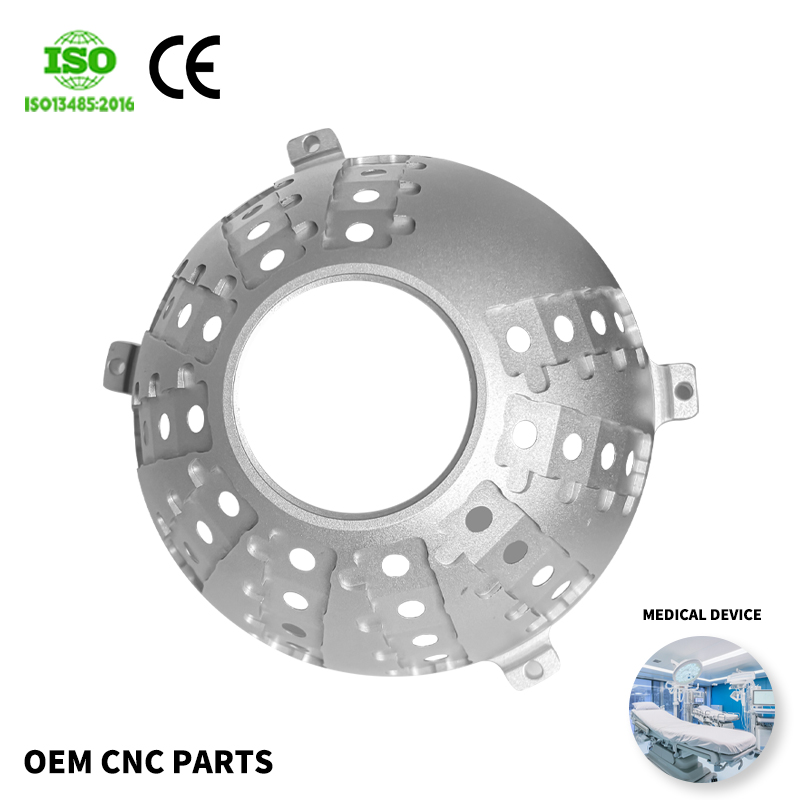
Selecting the right CNC precision parts for tight tolerance requirements is a critical decision that directly impacts product performance, assembly success, and overall system reliability. In industries where even microscopic deviations can cause failures, understanding which components meet your exacting specifications becomes essential. CNC precision parts manufactured to tight tolerances ensure that complex assemblies function as intended, reduce rework costs, and prevent costly recalls or downtime.
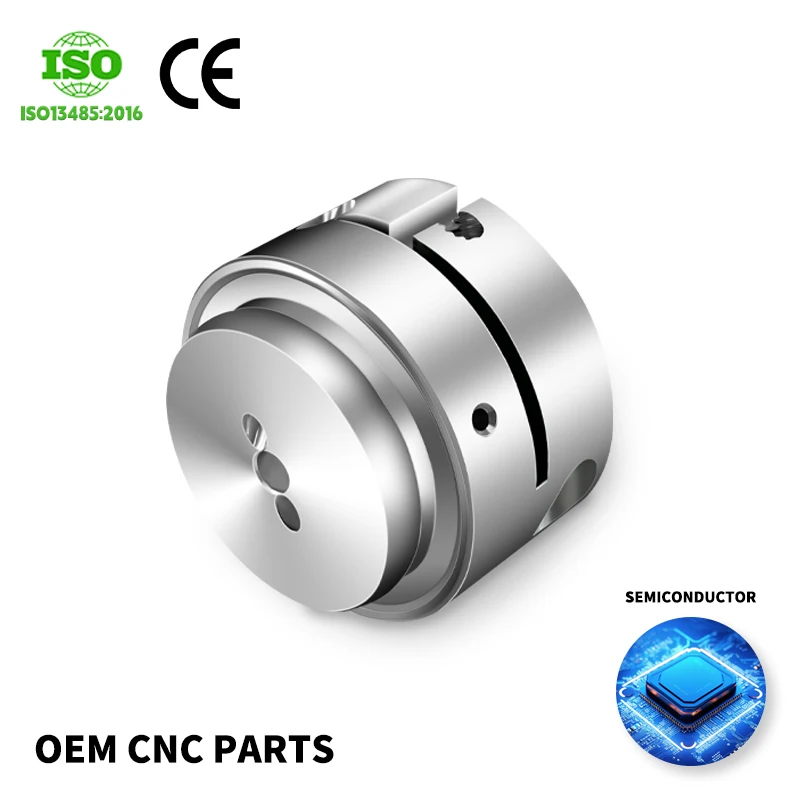
The semiconductor, aerospace, automotive, and medical device industries rely heavily on CNC precision parts that consistently deliver sub-micron accuracy. These sectors demand components that maintain dimensional stability, geometric precision, and surface finish quality across entire production runs. Identifying which CNC precision parts align with your specific tolerance bands requires understanding material capabilities, machining processes, and quality verification methods that distinguish production-grade components from standard industrial alternatives.
Material Selection for Tight Tolerance Specifications
Aluminum and Specialty Alloys
Aluminum remains a preferred material for CNC precision parts where tight tolerances and lightweight construction are both required. Its machinability allows fabricators to achieve consistent dimensional accuracy across high-volume runs while maintaining excellent surface finish. Specialty aluminum alloys such as 6061-T6 and 7075-T73 provide the material stability necessary for precision components in aerospace and defense applications where tolerance bands may range from ±0.001 inches to ±0.0001 inches.
Stainless steel and titanium alloys serve industries with more demanding corrosion resistance and thermal stability requirements. These materials hold their dimensional characteristics under stress and thermal cycling, making them suitable for CNC precision parts used in medical implants, high-temperature engines, and chemical processing equipment. The selection between aluminum, stainless steel, and titanium directly influences both the achievable tolerance range and the final cost of your CNC precision parts.
Surface Finish and Dimensional Stability
Surface finish quality directly correlates with the functionality of tight-tolerance CNC precision parts, especially in applications involving fluid sealing, optical alignment, or electrical contact. A component machined to ±0.0005 inches may fail its application if surface roughness exceeds specified parameters. Advanced CNC precision parts often undergo secondary finishing operations such as honing, polishing, or precision grinding to achieve both dimensional accuracy and surface quality simultaneously. This multi-step approach ensures that CNC precision parts maintain their performance characteristics throughout their service life.
Manufacturing Processes That Deliver Tight Tolerance CNC Precision Parts
Multi-Axis CNC Machining
Modern five-axis and higher CNC machining centers enable manufacturers to produce CNC precision parts with tolerance bands as tight as ±0.0001 inches in a single setup. This capability eliminates repositioning errors that would otherwise accumulate across multiple setups, directly supporting the precision requirements of today's complex assemblies. CNC precision parts produced on advanced multi-axis equipment exhibit superior geometric accuracy compared to traditional three-axis machining, particularly for angled surfaces, pockets, and complex contours.
Rigid tool holding, high-speed spindles, and real-time tool compensation systems ensure that CNC precision parts maintain consistent dimensions throughout extended production runs. Temperature-controlled machine environments prevent thermal expansion that would otherwise degrade the dimensional stability of tight-tolerance components. Manufacturers of CNC precision parts must invest in machine maintenance and calibration protocols that verify accuracy weekly or even daily, depending on the severity of tolerance requirements.
Quality Control and Verification Methods
CNC precision parts destined for tight tolerance applications undergo rigorous dimensional verification using coordinate measuring machines, laser scanning, and optical inspection systems. These verification methods confirm that every component meets specification before shipment. Statistical process control and first-article inspection reports provide documented evidence that CNC precision parts conform to design intent. Traceability documentation connects each component to specific machine parameters, tool wear records, and material certifications, creating accountability across the manufacturing chain.
Application Scenarios and Suitability for Tight Tolerance Requirements
Semiconductor and Electronics Manufacturing
The semiconductor industry demands CNC precision parts with tolerance bands often measured in microns rather than thousandths of inches. Components used in wafer handling equipment, deposition chambers, and test fixtures must exhibit exceptional dimensional consistency to prevent wafer contamination or mechanical jamming. CNC precision parts serving this market typically feature tolerances of ±0.0001 inches or tighter, requiring advanced machining centers, precision fixtures, and specialized coolant systems that prevent thermal drift.
Aerospace and Defense Applications
Aerospace components must function reliably under extreme temperature variations, vibration, and pressure conditions. CNC precision parts used in flight control systems, landing gear assemblies, and engine components require documentation proving compliance with military specifications and aerospace standards. These CNC precision parts undergo enhanced quality verification, including eddy current testing, ultrasonic inspection, and proof load testing to ensure no hidden defects compromise safety or performance.
Medical Device and Surgical Instruments
Medical-grade CNC precision parts face regulatory scrutiny under FDA and international standards, demanding comprehensive quality documentation and biocompatibility verification. Surgical instruments must exhibit exceptional surface finish to prevent tissue trauma, while orthopedic implants require dimensional precision that ensures proper fit within the patient's anatomy. CNC precision parts for medical applications often undergo passivation, electropolishing, or sterilization compatibility testing before release to clinical use.
FAQ
What tolerance range qualifies as tight for CNC precision parts?
Tight tolerance specifications for CNC precision parts typically fall below ±0.001 inches (±0.025 millimeters), with many advanced applications requiring ±0.0001 inches or tighter. The semiconductor and aerospace sectors routinely specify tolerances in the ±0.00005 inch range. Standard CNC precision parts usually maintain tolerances between ±0.005 and ±0.010 inches, making anything tighter than ±0.001 inches considered precision-grade. Your specific application requirements determine whether your CNC precision parts need to operate at the tight end of the tolerance spectrum.
How do I verify that CNC precision parts meet my tight tolerance requirements?
Verification of CNC precision parts involves coordinate measuring machines, laser scanning, optical inspection systems, and statistical process control methods. Request first-article inspection reports, material certifications, and traceability documentation from your CNC precision parts supplier. Third-party inspection and testing may be required for critical aerospace or medical applications. Many manufacturers of CNC precision parts offer in-process verification photos and dimensional data for each production batch, allowing you to confirm compliance before components arrive at your facility.
Which materials work best for achieving tight tolerances in CNC precision parts?
Aluminum alloys, stainless steel, and titanium rank among the most machinable materials for producing CNC precision parts with tight tolerances. Aluminum 6061-T6 offers excellent machinability and dimensional stability at a lower cost, while stainless steel provides superior corrosion resistance for harsh environments. Titanium delivers exceptional strength-to-weight ratios for aerospace applications where CNC precision parts must withstand extreme conditions. Your material choice should balance machinability, material stability, environmental requirements, and cost constraints when specifying CNC precision parts.