
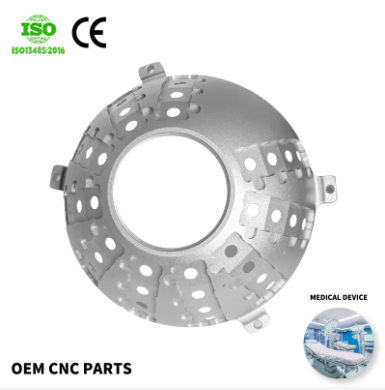
Modern manufacturing demands precision, efficiency, and the ability to create intricate geometries that traditional machining methods simply cannot achieve. The evolution of computer numerical control technology has revolutionized how manufacturers approach complex part production, with 5-axis CNC machining emerging as the gold standard for sophisticated manufacturing applications. This advanced machining technique offers unparalleled capabilities for producing components with complex surfaces, tight tolerances, and intricate features that would be impossible or economically unfeasible using conventional 3-axis methods.
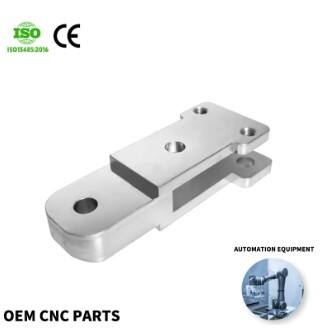
The fundamental advantage of 5-axis CNC machining lies in its ability to move a workpiece or cutting tool along five different axes simultaneously. Unlike traditional 3-axis machines that operate in X, Y, and Z linear directions, 5-axis systems add rotational capabilities around two additional axes, typically designated as A and B. This enhanced freedom of movement enables manufacturers to machine complex parts in a single setup, dramatically reducing production time while improving accuracy and surface finish quality.
Industries ranging from aerospace and automotive to medical devices and semiconductor manufacturing have embraced this technology for its ability to handle challenging geometries. The precision achievable through 5-axis CNC machining makes it indispensable for creating components where traditional manufacturing methods fall short, particularly when dealing with parts that feature compound angles, deep cavities, or intricate surface textures.
Understanding the Technical Advantages of Multi-Axis Machining
Enhanced Geometric Capabilities
The primary technical advantage of 5-axis CNC machining stems from its ability to approach a workpiece from virtually any angle without requiring multiple setups or complex fixturing. This capability is particularly valuable when manufacturing parts with undercuts, compound angles, or features that would otherwise be inaccessible using conventional machining methods. The continuous five-axis motion allows for smooth, uninterrupted tool paths that result in superior surface finishes and dimensional accuracy.
Traditional 3-axis machining often requires multiple operations and setups to achieve complex geometries, with each setup introducing potential sources of error and increasing overall production time. In contrast, 5-axis systems can complete intricate parts in a single operation, maintaining consistent reference points throughout the machining process. This single-setup capability is crucial for maintaining tight tolerances across multiple features and ensuring proper part geometry.
Superior Tool Access and Cutting Efficiency
The rotational capabilities inherent in 5-axis CNC machining provide optimal tool access to all areas of a workpiece, enabling the use of shorter, more rigid cutting tools. Shorter tools exhibit less deflection under cutting forces, resulting in improved accuracy and allowing for higher cutting speeds and feed rates. This enhanced rigidity translates directly into better surface finishes, tighter tolerances, and increased productivity.
Furthermore, the ability to orient the cutting tool perpendicular to the workpiece surface at any point ensures optimal cutting conditions throughout the machining process. This perpendicular orientation maximizes tool life, reduces cutting forces, and minimizes the risk of tool breakage, particularly important when working with expensive tooling or difficult-to-machine materials.
Applications Across Critical Industries
Aerospace Component Manufacturing
The aerospace industry represents one of the most demanding applications for 5-axis CNC machining technology. Aircraft components often feature complex geometries with strict weight requirements, necessitating the removal of material from intricate internal cavities while maintaining structural integrity. Turbine blades, engine housings, and structural components with compound curves benefit significantly from the capabilities offered by advanced multi-axis machining systems.
Aerospace manufacturers frequently work with exotic materials such as titanium alloys, Inconel, and carbon fiber composites, materials that present unique machining challenges. The enhanced tool positioning capabilities of 5-axis CNC machining enable optimal cutting conditions for these difficult materials, reducing tool wear and improving part quality while maintaining the exacting standards required for flight-critical components.
Medical Device Precision Manufacturing
Medical device manufacturing demands exceptional precision and surface quality, requirements that align perfectly with the capabilities of 5-axis CNC machining systems. Surgical instruments, implants, and diagnostic equipment components often feature complex organic shapes and microscopic features that require precise control over cutting tool orientation and position.
The biocompatibility requirements of medical devices often necessitate the use of specialized materials such as surgical-grade stainless steel, titanium alloys, and advanced ceramics. These materials benefit from the controlled cutting conditions achievable through 5-axis CNC machining, which minimizes work hardening and maintains the material properties essential for medical applications.
Economic Benefits and Production Efficiency
Reduced Setup Time and Labor Costs
One of the most significant economic advantages of 5-axis CNC machining lies in its ability to complete complex parts in a single setup. Traditional manufacturing approaches often require multiple operations, each necessitating part repositioning, new fixture development, and additional setup time. These multiple setups not only increase labor costs but also introduce opportunities for errors and dimensional variations between operations.
By consolidating multiple operations into a single setup, 5-axis CNC machining dramatically reduces both direct and indirect manufacturing costs. The elimination of intermediate handling, fixture changes, and part repositioning translates into substantial time savings, particularly for complex parts that might otherwise require dozens of separate operations across multiple machines.
Improved Part Quality and Consistency
The single-setup capability of 5-axis CNC machining systems contributes significantly to improved part quality and manufacturing consistency. When parts remain in a single fixture throughout the entire machining process, all features maintain consistent geometric relationships, eliminating the accumulation of setup errors that typically occur with multi-operation manufacturing processes.
This consistency is particularly valuable in high-volume production environments where part-to-part repeatability is crucial. The advanced control systems associated with modern 5-axis CNC machining platforms provide exceptional repeatability, ensuring that each part meets identical specifications regardless of production volume or timing.
Material Considerations and Machining Strategies
Optimizing Cutting Parameters for Complex Materials
The versatility of 5-axis CNC machining extends to its ability to handle a wide range of materials, from conventional metals to advanced composites and ceramics. Each material category presents unique challenges that benefit from the enhanced capabilities offered by multi-axis positioning. For example, when machining heat-sensitive materials, the ability to maintain optimal cutting angles helps manage heat generation and prevents thermal damage to the workpiece.
Advanced materials such as titanium alloys, which are notorious for their work-hardening characteristics, benefit significantly from the consistent cutting conditions achievable through 5-axis CNC machining. The ability to maintain optimal chip evacuation and cutting geometry throughout the machining process helps prevent work hardening and extends tool life while maintaining surface quality.
Surface Finish Enhancement Techniques
Surface finish quality represents a critical consideration in many manufacturing applications, particularly in industries where component performance depends on surface characteristics. The continuous tool path capabilities of 5-axis CNC machining systems enable the creation of smooth, seamless surfaces without the tool marks and witness lines typically associated with conventional machining methods.
Advanced machining strategies such as trochoidal milling and adaptive clearing become more effective when implemented on 5-axis platforms, as the enhanced tool positioning allows for optimal engagement angles and improved chip evacuation. These strategies are particularly beneficial when working with difficult-to-machine materials or when achieving specific surface finish requirements.
Technology Integration and Future Developments
CAM Software Evolution and Programming Efficiency
The effectiveness of 5-axis CNC machining depends heavily on sophisticated computer-aided manufacturing software capable of generating optimized tool paths that take full advantage of the system's capabilities. Modern CAM packages incorporate advanced algorithms that automatically optimize tool orientation, minimize air cutting time, and ensure collision avoidance throughout the machining process.
Recent developments in CAM software have introduced artificial intelligence and machine learning capabilities that continuously optimize machining parameters based on real-time feedback and historical performance data. These intelligent systems can automatically adjust cutting speeds, feeds, and tool paths to maximize efficiency while maintaining quality standards specific to 5-axis CNC machining applications.
Integration with Industry 4.0 Technologies
The integration of 5-axis CNC machining systems with Industry 4.0 technologies has opened new possibilities for automated production and quality control. Advanced sensor systems can monitor cutting forces, vibration, and temperature in real-time, providing feedback that enables automatic parameter adjustment and predictive maintenance scheduling.
Digital twin technology allows manufacturers to simulate and optimize 5-axis CNC machining processes before physical production, reducing development time and minimizing the risk of errors or tool damage. This virtual validation capability is particularly valuable for complex parts where traditional trial-and-error approaches would be time-consuming and expensive.
FAQ
What types of parts benefit most from 5-axis CNC machining
Parts with complex geometries, compound angles, deep cavities, or features requiring access from multiple directions benefit most from 5-axis CNC machining. This includes aerospace components like turbine blades, medical implants with organic shapes, automotive parts with intricate cooling passages, and any component that would require multiple setups on conventional machines. The technology is particularly valuable for parts where maintaining tight tolerances across multiple features is critical.
How does 5-axis CNC machining compare to traditional 3-axis methods in terms of cost
While 5-axis CNC machining systems typically have higher initial equipment costs, they often provide significant cost savings for complex parts through reduced setup times, fewer operations, and improved part quality. The ability to complete parts in a single setup eliminates multiple fixtures, reduces labor costs, and minimizes the risk of errors associated with part repositioning. For high-value, low-volume production, the cost benefits are often substantial.
What materials can be effectively processed using 5-axis CNC machining
5-axis CNC machining can effectively process virtually any machinable material, including aluminum alloys, stainless steel, titanium, Inconel, tool steels, plastics, and composites. The enhanced tool positioning capabilities make it particularly effective for difficult-to-machine materials that benefit from optimal cutting angles and improved chip evacuation. The technology is especially valuable for exotic materials used in aerospace and medical applications where traditional machining methods may struggle.
What should manufacturers consider when implementing 5-axis CNC machining technology
Key considerations include operator training requirements, CAM software capabilities, workholding solutions, and quality control procedures. Successful implementation requires investment in advanced programming software, skilled technicians familiar with multi-axis programming, and appropriate measurement equipment for verifying complex geometries. Manufacturers should also evaluate their current production mix to ensure sufficient volume of complex parts to justify the investment in 5-axis CNC machining capabilities.