
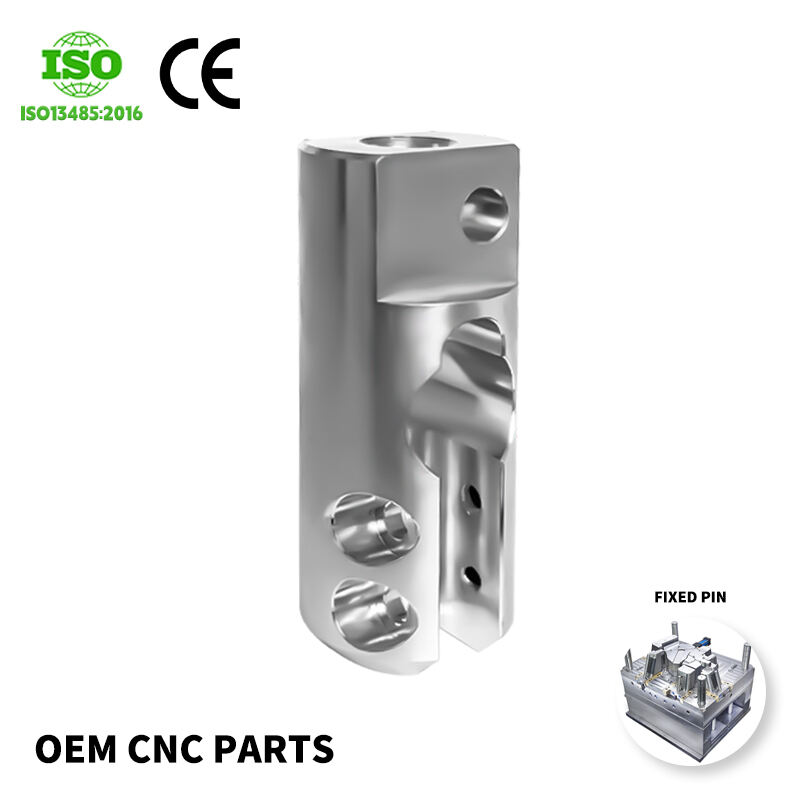
Manufacturing precision components requires careful consideration of machining processes, with CNC turning milling 5-axis representing the three fundamental approaches to modern subtractive manufacturing. Each method offers distinct advantages and limitations that directly impact part quality, production efficiency, and overall manufacturing costs. Understanding the nuanced differences between these processes enables engineers and procurement professionals to make informed decisions that optimize both technical performance and economic outcomes for their specific applications.
Understanding CNC Turning Fundamentals
Core Principles of Turning Operations
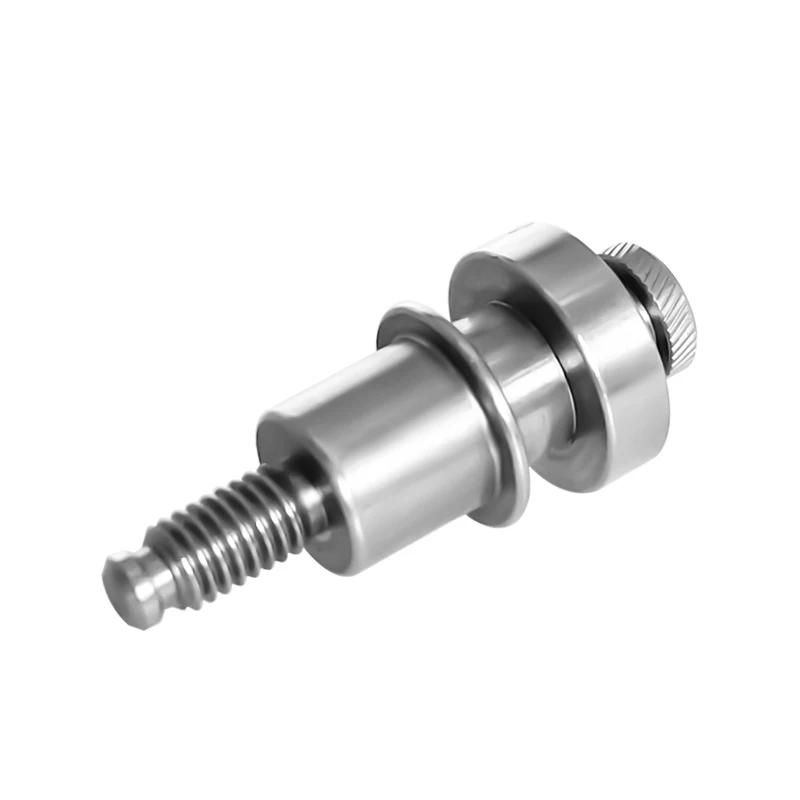
CNC turning operates on the principle of rotating workpieces while stationary cutting tools remove material to create cylindrical or conical geometries. This process excels at producing shafts, pins, bushings, and other rotationally symmetric components with exceptional surface finishes and tight tolerances. The inherent stability of the turning process, where the workpiece rotates against fixed tooling, provides superior concentricity and roundness compared to other machining methods. Modern turning centers incorporate live tooling capabilities that expand functionality beyond traditional turning operations, enabling cross-drilling, milling of flats, and complex feature creation without part repositioning.
Material Considerations for Turning Applications
Material selection significantly influences turning process effectiveness, with different alloys responding uniquely to rotational cutting forces. Stainless steels, aluminum alloys, and carbon steels each require specific cutting parameters and tool geometries to achieve optimal results. Work hardening materials like austenitic stainless steels benefit from continuous cutting action that turning provides, minimizing heat buildup and maintaining consistent material properties. The CNC turning milling 5-axis decision matrix must account for material machinability ratings, as some exotic alloys may require specialized tooling or alternative processing methods to achieve desired specifications.
Exploring CNC Milling Capabilities
Versatility in Complex Geometries
CNC milling operations utilize rotating cutting tools moving along multiple axes to remove material from stationary workpieces, enabling production of complex three-dimensional geometries impossible with turning alone. This process accommodates prismatic parts, irregular shapes, and intricate internal features through strategic tool path programming and workholding solutions. The flexibility inherent in milling operations makes it the preferred choice for prototype development, low-volume production, and components requiring multiple machined surfaces with varying orientations. Advanced milling centers incorporate automatic tool changers, allowing seamless transitions between different cutting tools to complete complex parts in single setups.
Surface Finish and Tolerance Capabilities
Achieving superior surface finishes through milling requires careful consideration of cutting parameters, tool geometry, and machine dynamics. Feed rates, spindle speeds, and depth of cut directly influence surface roughness, with optimized parameters producing mirror-like finishes on appropriate materials. The CNC turning milling 5-axis comparison reveals that while milling offers geometric flexibility, achieving the surface quality typical of turning operations may require additional finishing passes or specialized tooling. Multi-axis milling capabilities enable compound angle machining and undercut features that would otherwise require multiple setups or specialized fixtures.
Advanced 5-Axis Machining Advantages
Simultaneous Multi-Axis Movement
Five-axis machining represents the pinnacle of subtractive manufacturing technology, enabling simultaneous movement of cutting tools along five distinct axes to create highly complex geometries in single setups. This capability dramatically reduces setup times, improves part accuracy through elimination of multiple workholding operations, and enables machining of features that would be impossible with conventional three-axis equipment. The rotational axes allow cutting tools to approach workpieces from optimal angles, reducing tool length requirements and minimizing vibration-induced quality issues. Aerospace components, medical implants, and precision molds frequently require the geometric complexity that only CNC turning milling 5-axis equipment can provide.
Programming and Setup Complexity
The advanced capabilities of five-axis machining come with increased programming complexity and setup requirements that must be carefully considered during process selection. CAM software for five-axis operations requires sophisticated collision detection algorithms, tool path optimization routines, and post-processing capabilities specific to individual machine configurations. Operator skill requirements increase significantly compared to conventional three-axis operations, as simultaneous axis movement creates potential for costly programming errors or machine crashes. However, modern five-axis systems incorporate advanced safety features and simulation capabilities that help mitigate these risks while maintaining the superior geometric capabilities that justify the increased complexity.
Part Geometry Analysis Methods
Geometric Feature Classification
Systematic analysis of part geometry provides the foundation for optimal process selection between CNC turning milling 5-axis alternatives. Cylindrical features, threads, and concentric diameters strongly favor turning operations due to the natural alignment between part geometry and process capabilities. Prismatic shapes, pockets, slots, and angular features typically require milling operations to achieve required specifications efficiently. Complex sculptured surfaces, compound angles, and undercut features may necessitate five-axis capabilities to maintain acceptable cycle times and surface quality standards.
Feature Accessibility Assessment
Tool accessibility analysis determines whether conventional three-axis operations can adequately machine all required features or if advanced multi-axis capabilities become necessary. Deep pockets with high aspect ratios may require five-axis positioning to minimize tool deflection and achieve acceptable surface finishes. Angled holes, compound curves, and features requiring specific surface normal orientations often drive the CNC turning milling 5-axis selection toward more sophisticated equipment. Systematic evaluation of tool approach angles, clearance requirements, and workholding constraints helps identify potential processing limitations early in the design phase.
Production Volume Considerations
Economic Break-Even Analysis
Production volume requirements significantly influence the optimal balance between process capability and economic efficiency when evaluating CNC turning milling 5-axis options. High-volume production scenarios often justify dedicated turning or milling setups that maximize throughput for specific part geometries, while low-volume or prototype applications may benefit from the flexibility of five-axis equipment despite higher hourly rates. Setup costs, cycle times, and quality consistency must be evaluated across expected production quantities to determine the most cost-effective manufacturing approach. Amortization of setup costs becomes more favorable as production quantities increase, potentially shifting the economic advantage toward more specialized equipment configurations.
Batch Size Optimization
Optimal batch sizes depend on the relationship between setup complexity and individual part cycle times across different CNC turning milling 5-axis configurations. Turning operations with minimal setup requirements may economically produce smaller batch sizes compared to complex five-axis setups requiring extensive programming and fixturing development. However, five-axis capabilities that eliminate secondary operations can improve overall efficiency even for moderate production volumes by reducing total processing time and quality variations associated with multiple setups. Flexible manufacturing systems incorporating multiple process capabilities enable dynamic batch size optimization based on current production requirements and equipment availability.
Material Properties Impact
Machinability Characteristics
Material machinability ratings provide crucial guidance for CNC turning milling 5-axis process selection, as different alloys respond uniquely to various cutting conditions and tool geometries. Free-machining materials like certain aluminum alloys and carbon steels perform well across all three process types, while difficult-to-machine materials such as titanium alloys or hardened steels may require specific process selection to achieve acceptable tool life and surface quality. Work hardening materials benefit from the continuous cutting action available in turning operations, while materials prone to heat-affected zones may require the interrupted cutting characteristic of milling operations to maintain metallurgical properties.
Heat Treatment Considerations
Post-machining heat treatment requirements can significantly influence the optimal CNC turning milling 5-axis process selection, as different machining methods impart varying levels of residual stress and surface modification. Precision components requiring stress relief or dimensional stability may favor processes that minimize induced stresses during material removal. The thermal cycling associated with interrupted cutting in milling operations can sometimes provide beneficial stress relief compared to the continuous heating characteristic of turning operations. Five-axis capabilities enable strategic material removal sequences that help manage residual stress distribution throughout complex geometries.
Quality and Tolerance Requirements
Dimensional Accuracy Capabilities
Achieving tight dimensional tolerances requires careful matching of process capabilities to part requirements when selecting between CNC turning milling 5-axis alternatives. Turning operations excel at maintaining concentricity, roundness, and cylindricity tolerances due to the inherent stability of rotating workpieces against fixed cutting tools. Milling operations provide excellent positional accuracy and geometric relationships between machined features through rigid machine structures and precise axis positioning systems. Five-axis equipment combines these advantages while adding the capability to maintain optimal cutting conditions throughout complex geometries, often resulting in superior overall dimensional accuracy for intricate parts.
Surface Finish Standards
Surface finish requirements often drive process selection decisions, as each CNC turning milling 5-axis method produces characteristic surface textures and roughness patterns. Turning operations naturally generate circumferential tool marks that provide excellent sealing surfaces for O-rings and gaskets while achieving very low roughness values with appropriate cutting parameters. Milling operations create crosshatch or directional surface patterns that may require specific orientation relative to part function or aesthetic requirements. Five-axis capabilities enable optimization of tool orientation relative to surface normal vectors, potentially improving surface finish quality while maintaining geometric accuracy throughout complex three-dimensional surfaces.
Cost Analysis Framework
Direct Manufacturing Costs
Comprehensive cost analysis for CNC turning milling 5-axis selection must include direct manufacturing expenses such as machine hourly rates, tooling costs, and material utilization efficiency. Turning operations typically offer lower hourly rates but may require secondary operations for complex features, while five-axis equipment commands premium hourly rates but can complete intricate parts in single setups. Tooling costs vary significantly between processes, with specialized five-axis tooling often requiring higher initial investment but potentially offering superior tool life through optimized cutting conditions. Material waste considerations become increasingly important for expensive alloys, where five-axis near-net-shape capabilities may offset higher processing costs through improved material utilization.
Indirect Cost Factors
Indirect manufacturing costs including quality assurance, inventory management, and production scheduling complexity significantly influence the total cost of ownership for different CNC turning milling 5-axis approaches. Multiple-operation processes require intermediate quality checks, work-in-progress inventory, and coordination between different manufacturing cells, adding administrative overhead and potential quality risks. Single-setup five-axis operations minimize these indirect costs while potentially improving delivery performance and reducing manufacturing lead times. The complexity of five-axis programming and setup may require specialized personnel or extended development times that must be factored into overall project economics.
FAQ
What factors determine whether turning or milling is more suitable for a specific part?
Part geometry serves as the primary determining factor, with cylindrical or rotationally symmetric features favoring turning operations, while prismatic shapes and complex three-dimensional geometries typically require milling capabilities. Surface finish requirements, tolerance specifications, and production volume also influence the decision, as turning generally achieves superior surface quality on appropriate geometries while milling offers greater geometric flexibility for complex parts.
When does five-axis machining become economically justified over conventional three-axis operations?
Five-axis machining becomes economically justified when part complexity requires multiple setups on conventional equipment, when tight tolerances between features machined in different orientations are specified, or when production volumes are sufficient to amortize the higher equipment and programming costs. Complex aerospace components, medical implants, and precision molds often require five-axis capabilities to achieve required specifications efficiently.
How do material properties affect the choice between different CNC machining processes?
Material machinability, work hardening characteristics, and thermal properties significantly influence optimal process selection. Work hardening materials benefit from the continuous cutting action of turning operations, while materials requiring specific surface orientations or complex cooling strategies may favor milling or five-axis approaches. Heat-sensitive alloys may require the interrupted cutting characteristic of milling to manage thermal buildup effectively.
What programming and operator skill differences exist between these machining processes?
Programming complexity increases significantly from turning to milling to five-axis operations, with five-axis requiring sophisticated CAM software, collision detection capabilities, and extensive simulation before production. Operator skill requirements follow similar progression, as five-axis equipment requires understanding of simultaneous multi-axis movement, advanced workholding techniques, and complex tool path verification procedures that exceed conventional three-axis operation requirements.
Table of Contents
- Understanding CNC Turning Fundamentals
- Exploring CNC Milling Capabilities
- Advanced 5-Axis Machining Advantages
- Part Geometry Analysis Methods
- Production Volume Considerations
- Material Properties Impact
- Quality and Tolerance Requirements
- Cost Analysis Framework
-
FAQ
- What factors determine whether turning or milling is more suitable for a specific part?
- When does five-axis machining become economically justified over conventional three-axis operations?
- How do material properties affect the choice between different CNC machining processes?
- What programming and operator skill differences exist between these machining processes?