
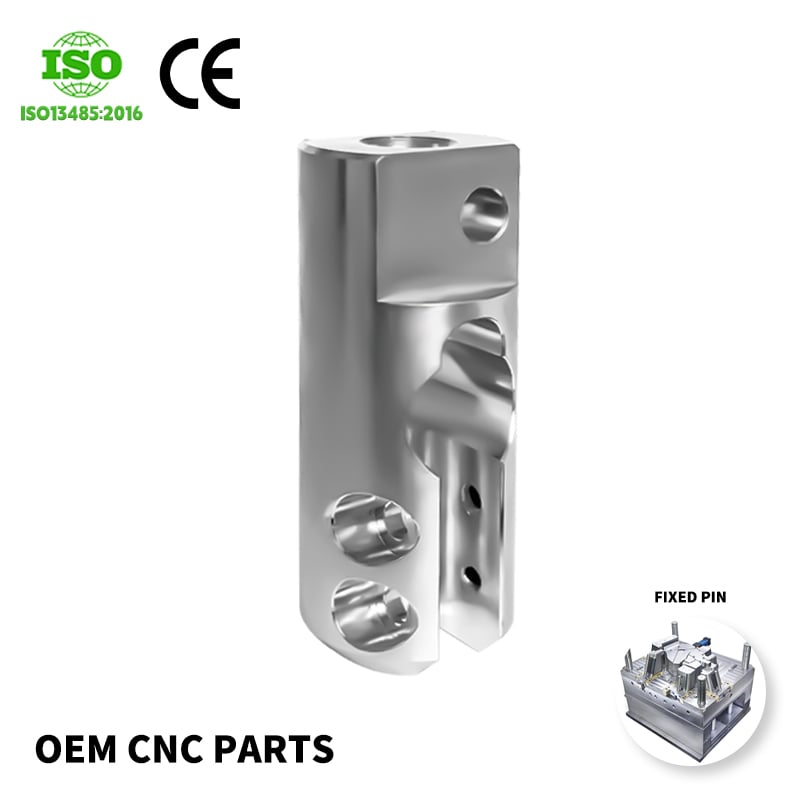
Complex automation parts demand precision, consistency, and reliability that manual manufacturing cannot reliably deliver. CNC machining has become the industry standard for producing sophisticated automation parts because it combines advanced technology with repeatability at scale. Whether you're designing hydraulic components, robotic assemblies, or control system housings, CNC machines deliver the tight tolerances and consistent quality that modern automation systems require to function reliably.
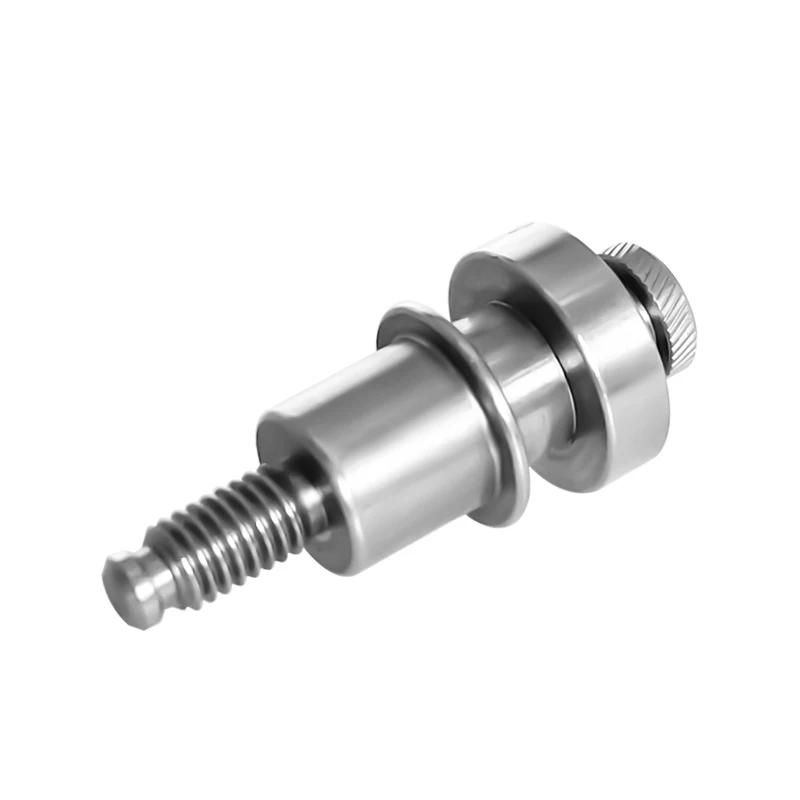
The manufacturing landscape has shifted dramatically over the past two decades. As automation systems become more integrated, the demand for precision automation parts has accelerated. CNC machining stands out because it addresses the core challenges that automation engineers face: achieving exact specifications, managing material variability, and maintaining quality across production runs. This article explores why CNC machining represents the optimal manufacturing choice for complex automation parts and how it supports modern industrial operations.
Precision and Tolerances in Automation Parts Manufacturing
Automation systems operate within narrow performance windows. A deviation of just a few thousandths of an inch can cause misalignment, binding, or premature wear in critical automation parts. CNC machining achieves dimensional accuracy far beyond what traditional methods can produce. The combination of computer control, servo-driven axes, and precision cutting tools ensures that each component matches design specifications exactly, part after part.
Repeatability as a Core Strength
One of the defining advantages of CNC machining for automation parts is absolute repeatability. Once a program is written and verified, the machine produces identical parts consistently throughout the entire production run. This eliminates the human variation that characterizes manual manufacturing. For automation parts that must integrate seamlessly with other components, this repeatability is not optional—it is a fundamental requirement. Quality engineers can trust that the hundredth part will perform identically to the first.
Complex Geometry and Five-Axis Capability
Modern automation systems often require parts with intricate geometries that would be impossible or prohibitively expensive to manufacture manually. Five-axis CNC machines can approach a workpiece from multiple angles in a single setup, eliminating the need for repositioning and secondary operations. This capability is especially valuable for automation parts that feature compound angles, internal passages, or sculptured surfaces. The speed and accuracy of five-axis machining reduces both lead time and cost while maintaining the precision that automation parts demand.
Material Versatility and Process Control
Automation parts operate in diverse environments—high-temperature furnaces, corrosive chemical processes, cryogenic settings, and cleanroom environments. This diversity demands materials ranging from stainless steel and aluminum to titanium and superalloys. CNC machining handles virtually any machinable material with consistent results. The programmable nature of CNC processes means that cutting speeds, feeds, and tool paths can be optimized for each specific material, ensuring optimal results whether you're working with soft aluminum or hard-to-machine inconel.
Surface Finish and Post-Processing Efficiency
The surface finish quality of automation parts directly impacts assembly ease, mating surface performance, and corrosion resistance. CNC machines can achieve mirror-like finishes or specific Ra values that automation engineers specify. Because CNC processes are so precisely controlled, secondary finishing operations are often minimized or eliminated entirely. This efficiency reduces both cost and timeline while ensuring that automation parts meet exacting surface specifications.
Stress Concentration and Material Integrity
Manual manufacturing methods like punching or stamping can create stress concentrations and material degradation that compromise the performance of automation parts. CNC machining is a subtractive process that removes material cleanly without disturbing the grain structure of the remaining material. This preservation of material integrity is critical for automation parts subject to cyclic loading, shock, or high-pressure conditions. The controlled cutting action of CNC tools ensures clean surfaces and predictable material properties throughout the finished part.
Cost Efficiency and Production Scaling
Many manufacturers assume that precision manufacturing must be expensive, but CNC machining delivers excellent value when applied intelligently to automation parts. While the initial tooling and programming investment is significant, the cost per unit decreases dramatically as production volume increases. For complex automation parts, the amortized tooling cost often becomes negligible compared to the savings achieved through reduced scrap, minimal rework, and faster assembly integration downstream.
Rapid Prototyping and Iterative Design
Automation systems often require design iteration before production release. CNC machining supports this development cycle effectively because programming modifications take hours rather than weeks. Engineers can test design variations quickly, evaluate performance, and refine specifications without waiting for new tooling or fixtures. This agility is invaluable for teams developing next-generation automation parts where performance requirements may not be fully crystallized until prototype testing begins.
Inventory and Lead Time Advantages
Unlike stamped or molded automation parts that require long lead times for tooling, CNC machining can produce parts relatively quickly once programming is complete. This capability enables build-to-order strategies that reduce inventory carrying costs. For automation systems where part specifications may vary by customer or application, CNC machining's flexibility becomes a significant competitive advantage. Manufacturers can respond rapidly to custom requirements or design changes without sacrificing quality or timeline.
Quality Assurance and Compliance
Industrial automation systems often operate in regulated environments where traceability, documentation, and quality certification are mandatory. CNC machines generate detailed records of every cycle—feed rates, spindle speeds, tool wear, and actual dimensions. These records provide the data trail that quality auditors and compliance officers require. For automation parts destined for aerospace, pharmaceutical, or nuclear applications, this documentary evidence is invaluable and often required by customer specifications or industry standards.
Integration with Advanced Metrology
Modern CNC facilities integrate in-process measurement and automated inspection systems. Coordinate measuring machines (CMMs) and optical scanning systems can verify complex automation parts against CAD models in seconds. This closed-loop quality approach catches problems immediately rather than after parts have entered inventory. For high-precision automation parts, this real-time verification ensures that specifications are consistently met and that any tooling drift is detected and corrected before scrap accumulates.
FAQ
What tolerances can CNC machining achieve for automation parts?
Modern CNC machines routinely hold tolerances of ±0.0005 inches or better for automation parts, with some specialized equipment achieving ±0.0001 inches. The achievable tolerance depends on material, part geometry, machine capability, and the skill of the programmer. For most automation parts, tolerances tighter than ±0.001 inches are readily achievable without premium pricing or extended lead times.
How does CNC machining compare to other manufacturing methods for automation parts?
Stamping and molding offer cost advantages at very high volumes but lack flexibility and cannot achieve the precision that complex automation parts demand. Casting can produce complex geometries but struggles with dimensional consistency and surface finish quality. CNC machining occupies the optimal middle ground for automation parts: precision and flexibility at reasonable cost for moderate to high production volumes. For custom or low-volume automation parts, CNC machining often provides the best overall value.
Can CNC machining handle production volumes that my automation parts require?
CNC facilities range from single-machine shops to large productions with dozens of machines running continuously. Whether you need fifty parts or fifty thousand automation parts, CNC machining can scale to meet volume requirements. The programming investment is amortized across whatever production volume you require, making CNC economical for both prototypes and full-scale production runs of automation parts.