
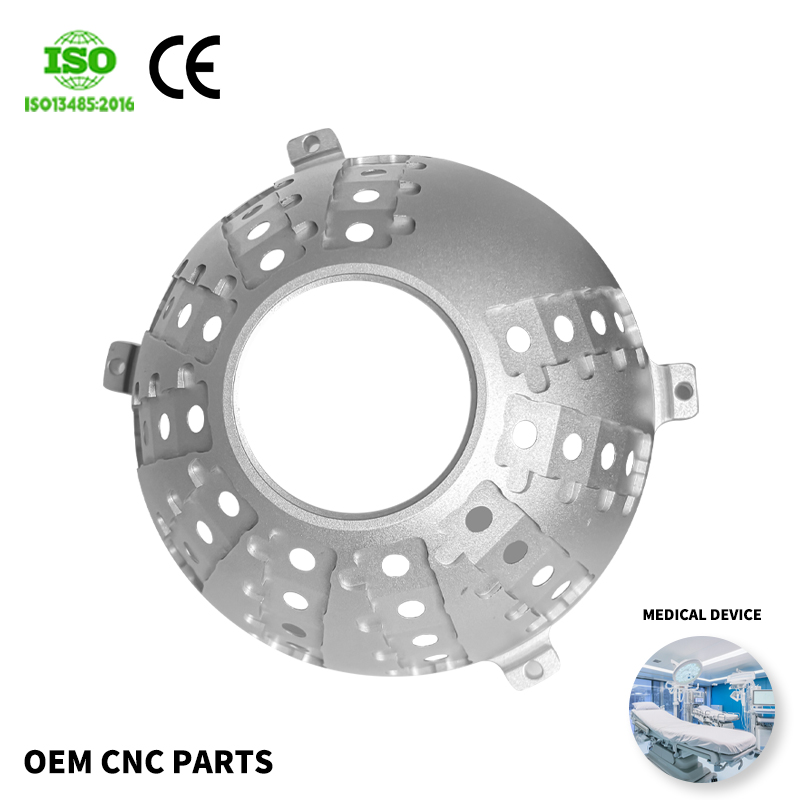
Selecting the right manufacturer for your custom CNC machining needs is a critical business decision that directly impacts product quality, production timelines, and overall costs. In today's competitive industrial landscape, numerous manufacturers offer CNC machining services, but their capabilities, quality standards, and operational maturity vary significantly. Understanding how to evaluate and compare these providers ensures you select a partner whose strengths align with your technical requirements and business objectives.

The process of comparing CNC machining manufacturers requires a structured approach that extends beyond simple price quotes. You must assess technical expertise, equipment infrastructure, quality certification, and past project experience to make an informed choice. This comprehensive evaluation helps reduce production risks, minimizes rework cycles, and ensures your components meet stringent performance specifications from the first production run forward.
Evaluating Technical Capabilities and Equipment Infrastructure
Machine Specifications and Capacity Range
The foundational aspect of comparing CNC machining manufacturers involves understanding their equipment portfolio and technical specifications. Leading manufacturers maintain diverse CNC machine types, including multi-axis mills, turning centers, and horizontal machining centers that accommodate varying part geometries and production volumes. When evaluating custom CNC machining providers, examine the maximum part sizes they can accommodate, the tolerance ranges they can consistently achieve, and the material compatibility across their equipment fleet. A manufacturer with broader equipment diversity typically handles more complex projects without outsourcing operations, maintaining better quality control throughout the production cycle.
Advanced Capabilities and Secondary Operations
Premium CNC machining manufacturers often provide integrated services beyond basic turning and milling. These value-added capabilities include multi-axis simultaneous machining, EDM services, precision grinding, heat treatment, and surface finishing. When comparing providers, assess whether they offer these secondary operations in-house or outsource them to third-party vendors. In-house capabilities reduce production lead times, improve quality consistency, and minimize communication delays between service providers. Additionally, examine their capacity for rapid prototyping, small-batch production, and high-volume manufacturing to ensure they can scale with your business growth.
Quality Standards and Certification Assessment
Industry Certifications and Quality Management Systems
Reputable CNC machining manufacturers maintain recognized quality certifications that verify their commitment to consistent standards and continuous improvement. ISO 9001 certification demonstrates adherence to quality management principles, while ISO 13485 indicates compliance with medical device manufacturing standards. When evaluating custom CNC machining providers, request documentation of their active certifications and inquire about their third-party audit frequency. Beyond certifications, understand their internal quality procedures, including inspection protocols, statistical process control methods, and traceability systems that track material batch numbers through production stages.
Quality Metrics and Performance Consistency
Comparing CNC machining manufacturers requires examining their documented quality performance metrics, including first-pass yield rates, defect rates, and dimensional accuracy records. Request detailed quality reports from recent projects similar to your specifications to verify their capability to maintain tight tolerances consistently. Leading manufacturers often employ coordinate measuring machines (CMMs) and advanced inspection equipment that verify dimensional accuracy with micron-level precision. Additionally, inquire about their capability to provide material certifications, hardness testing documentation, and surface finish verification reports when your application requires these assurances.
Production Timelines and Project Management Approach
Lead Time Assessment and Scheduling Flexibility
Production lead times significantly influence your supply chain efficiency and time-to-market objectives. When comparing CNC machining manufacturers, understand their typical lead times for standard quantities, rush orders, and repeat production. Request information about their production scheduling methodology, inventory practices for commonly used materials, and their ability to accommodate urgent requirements without quality compromises. Manufacturers with established relationships with material suppliers typically maintain better material availability and can accelerate lead times when necessary. Additionally, assess their flexibility regarding batch sizes, as some providers handle prototypes efficiently while others optimize for high-volume production schedules.
Communication and Project Transparency
Effective project management distinguishes exceptional CNC machining manufacturers from average providers. When evaluating custom CNC machining services, determine how the manufacturer communicates production progress, handles design modifications, and manages unexpected challenges. Inquire about their willingness to provide in-process photos, attend design review meetings, and supply detailed production documentation. Manufacturers using real-time production tracking systems and transparent communication protocols reduce uncertainty during manufacturing cycles. This transparency becomes especially critical for complex projects or when components require tight synchronization with other suppliers' deliveries.
Cost Structure and Value Proposition Analysis
Transparent Pricing and Quote Methodology
Comparing CNC machining manufacturers effectively requires understanding their pricing models and cost drivers. Request detailed quotes that itemize tooling costs, setup charges, unit piece prices, and inspection fees to enable fair comparison across providers. Manufacturers using advanced CAM software and optimized tool paths often produce more competitive pricing through material waste reduction and cycle time efficiency. When evaluating custom CNC machining quotes, distinguish between temporary promotional pricing and sustainable market rates, as unrealistically low quotes often indicate cutting corners on quality or rushing through production stages.
Long-Term Value Rather Than Initial Cost
Selecting CNC machining manufacturers based solely on lowest price creates hidden costs through increased defect rates, extended lead times, and rework expenses. Experienced procurement professionals recognize that manufacturers offering premium pricing often justify those costs through superior quality, reliability, and technical consultation. When comparing providers, calculate the total cost of ownership by incorporating scrap loss percentages, inspection time, and potential production delays into your decision framework. Manufacturers demonstrating strong engineering expertise often identify design improvements that reduce manufacturing complexity and ultimately lower total production costs despite higher hourly rates.
FAQ
What specific questions should I ask when requesting quotes from CNC machining manufacturers?
Request detailed specifications including lead times for prototype and production quantities, minimum order quantities, available material options, tolerance capabilities, surface finish options, and comprehensive pricing breakdowns. Inquire about their quality certifications, inspection procedures, and whether they provide material testing documentation. Ask about their experience with similar projects, their capacity to accommodate design modifications, and their warranty or defect remediation policies. Additionally, clarify their communication protocols, scheduling flexibility for rush orders, and their approach to managing supply chain disruptions.
How can I verify a CNC machining manufacturer's quality reputation?
Request references from customers in your industry and contact them directly to discuss their experience with the manufacturer. Examine the manufacturer's certifications, quality metrics, and any published case studies demonstrating their capabilities. Visit their facility if possible to observe equipment maintenance, organization, and workforce engagement levels. Check industry publications and manufacturing forums for feedback about the provider. Additionally, request to see sample parts from previous projects and inquire about their defect history, how they handle quality failures, and their commitment to continuous improvement initiatives.
What red flags should I watch for when evaluating custom CNC machining providers?
Be cautious of manufacturers unwilling to provide quality certifications, customer references, or detailed production documentation. Avoid providers offering unrealistically low quotes without explaining their cost advantages, as this often indicates compromised quality or inadequate equipment investment. Red flags include reluctance to discuss their equipment specifications, inability to articulate their inspection procedures, or vague responses about their production capabilities. Additionally, consider it concerning if a manufacturer cannot provide samples, seems disorganized during communication, or demonstrates limited interest in understanding your specific requirements and quality standards.