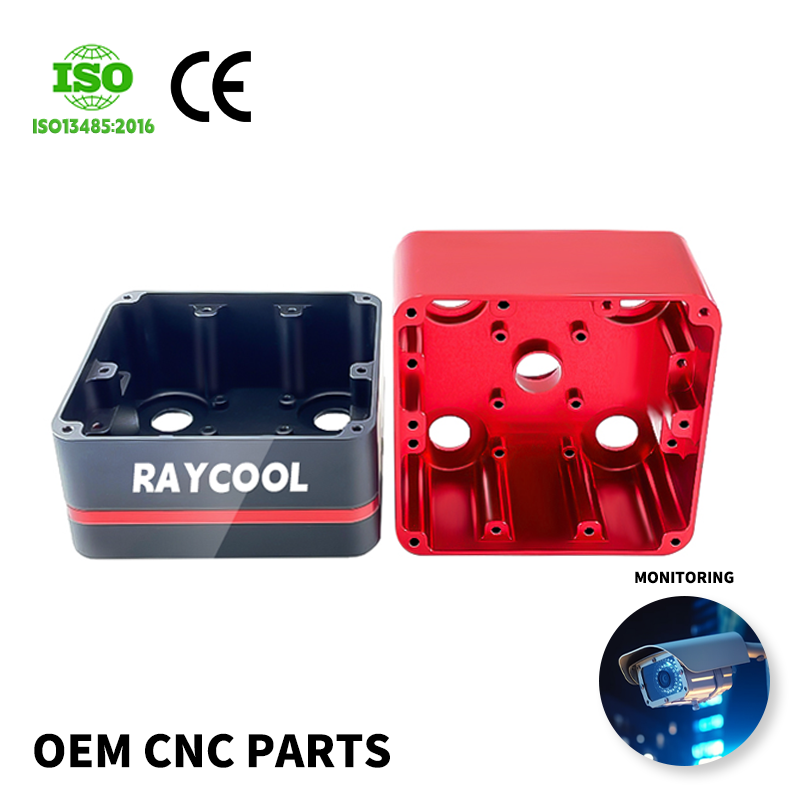
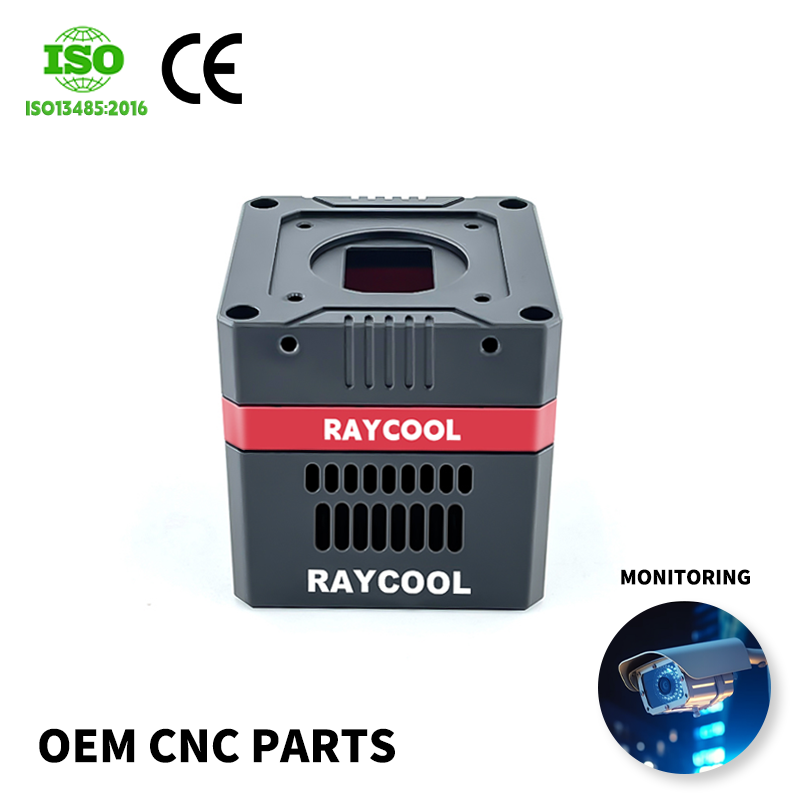
CNC Machined Components - Precision Parts Manufacturing

cnc machined components

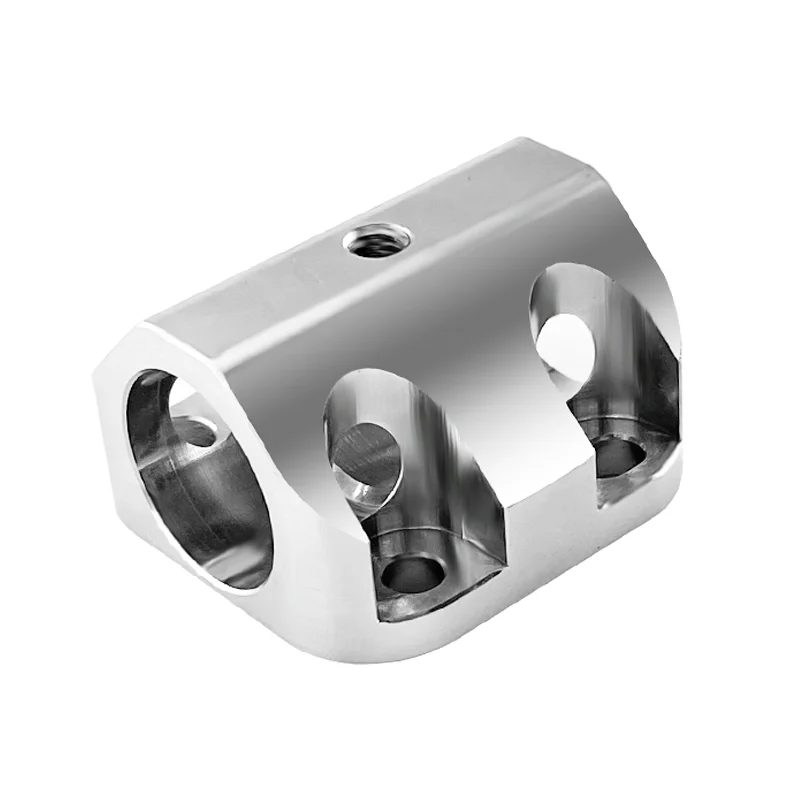
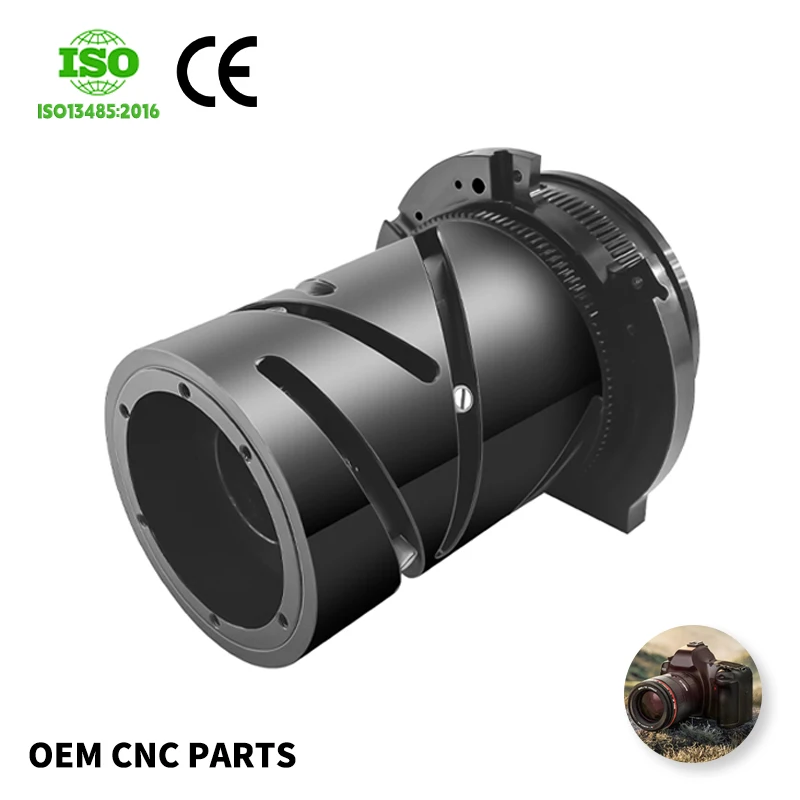
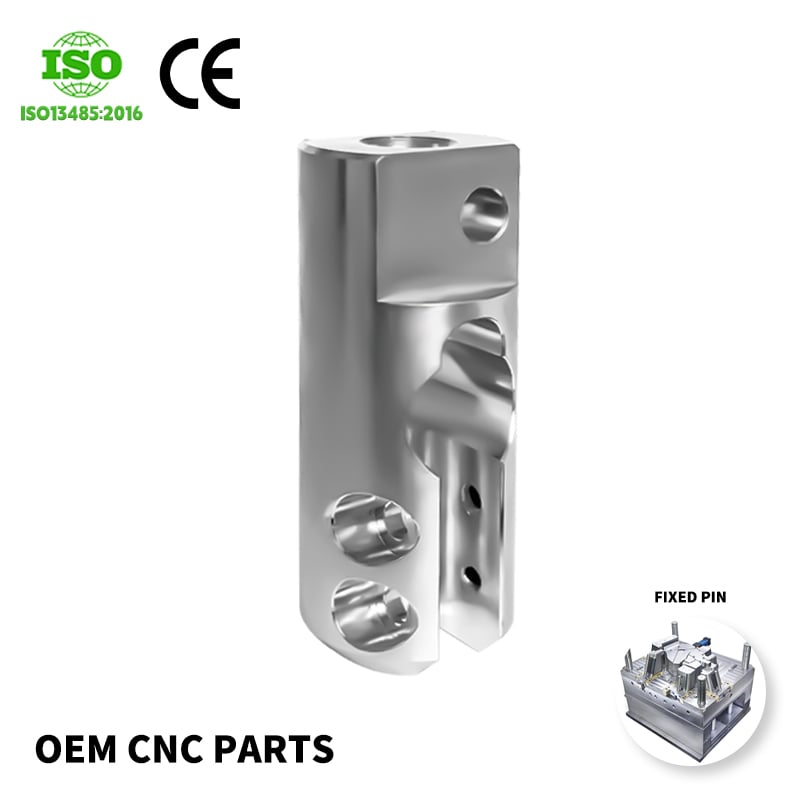
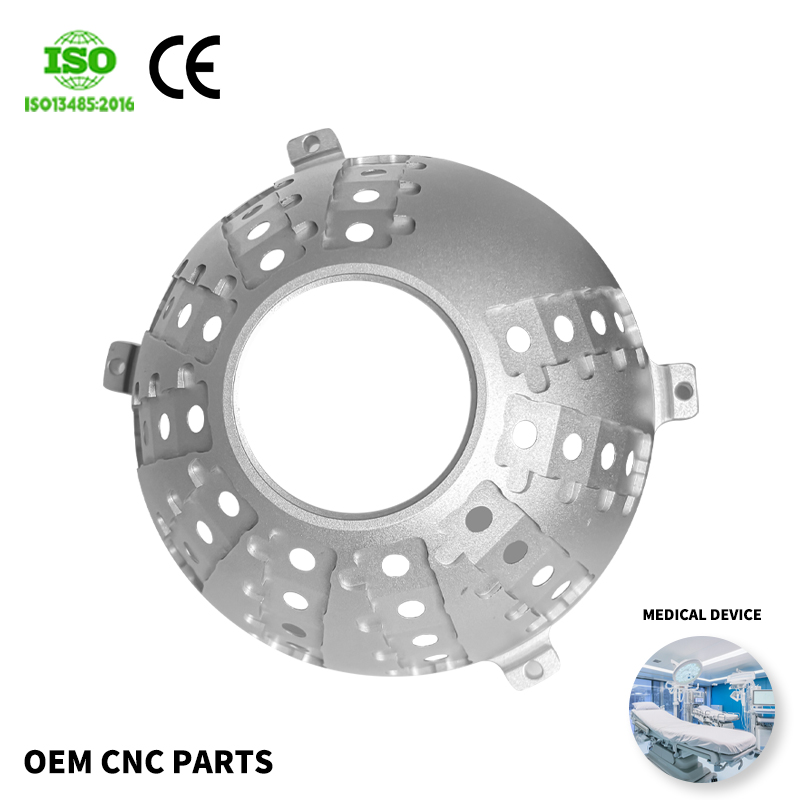
CNC machined components are precision-engineered parts manufactured using Computer Numerical Control technology, which enables automated and highly accurate production across various materials including metals, plastics, and composites. These components serve as critical building blocks in industries ranging from aerospace and automotive to medical devices and electronics. The main function of CNC machined components is to deliver exact specifications with repeatable quality, ensuring that each part meets stringent dimensional tolerances and surface finish requirements. Technological features include multi-axis machining capabilities, enabling complex geometries and intricate details that manual machining cannot achieve. Advanced CNC systems utilize CAD/CAM software integration, allowing seamless transition from digital design to physical production while minimizing human error. CNC machined components offer versatility in material selection, accommodating aluminum, stainless steel, titanium, brass, plastics, and exotic alloys based on application demands. Applications span prototype development, small batch production, and high-volume manufacturing, making these components essential for custom machinery parts, engine components, surgical instruments, electronic housings, and structural assemblies. The automated nature of CNC machining ensures consistent quality across production runs, reducing waste and improving efficiency. With capabilities for tight tolerances down to microns and surface finishes suitable for critical applications, CNC machined components represent the industry standard for precision manufacturing in modern engineering and production environments.

Popular Products

Choosing CNC machined components delivers significant value through exceptional precision and consistency that directly impacts your product quality and operational efficiency. The automated machining process eliminates variability associated with manual operations, ensuring every component matches exact specifications with tolerances as tight as plus or minus 0.001 inches. This precision translates to better assembly fit, reduced rejection rates, and improved overall product performance. Cost efficiency emerges through reduced labor requirements and faster production cycles, allowing you to scale manufacturing without proportionally increasing workforce or operational expenses. The versatility of CNC machining accommodates rapid design iterations and prototyping, enabling you to test concepts quickly before committing to large production runs, thereby reducing development risks and time-to-market. Material flexibility means you can select optimal materials for specific applications without changing manufacturing processes, whether you need lightweight aluminum for aerospace applications or corrosion-resistant stainless steel for marine environments. CNC machined components offer superior repeatability, crucial when producing replacement parts years after initial production or maintaining consistency across multiple production facilities. The digital nature of CNC programming allows easy storage and retrieval of part specifications, simplifying reorders and ensuring long-term availability. Complex geometries that would be impossible or prohibitively expensive through traditional machining become feasible and cost-effective with multi-axis CNC systems. Quality assurance improves through integration with measurement systems and statistical process control, providing real-time monitoring and documentation for regulatory compliance. These practical benefits combine to lower total cost of ownership while delivering components that meet demanding performance standards across diverse applications.

Latest News

Best Practices for Machining Titanium Alloy Components in Precision Manufacturing

05

Dec

Best Practices for Machining Titanium Alloy Components in Precision Manufacturing

Titanium alloys have become indispensable materials in precision manufacturing, particularly in aerospace, medical, and automotive industries where exceptional strength-to-weight ratios and corrosion resistance are paramount. The unique properties of...
View More
Surface Finish and Tolerance Control for Aluminum in CNC Fabrication

05

Dec

Surface Finish and Tolerance Control for Aluminum in CNC Fabrication

Modern manufacturing demands exceptional precision, particularly when working with aluminum components that require tight tolerances and superior surface finishes. The aluminum CNC fabrication process has evolved dramatically over recent years, incor...
View More
Material Customization: How to Select Aluminum, Stainless Steel, Titanium, Copper, or Plastic

05

Dec

Material Customization: How to Select Aluminum, Stainless Steel, Titanium, Copper, or Plastic

Selecting the right material for manufacturing components requires careful consideration of multiple factors including mechanical properties, environmental conditions, cost constraints, and specific application requirements. Material customization ha...
View More
Key Considerations When Sourcing Anodized Parts from Manufacturers?

06

Feb

Key Considerations When Sourcing Anodized Parts from Manufacturers?

Manufacturing industries increasingly rely on anodized components to enhance product durability, aesthetic appeal, and corrosion resistance. The anodizing process creates a protective oxide layer on aluminum surfaces, making these parts essential for...
View More

Get a Free Quote

Our representative will contact you soon.
Email
Name
Company Name
Message
0/1000

cnc machined components

Unmatched Precision and Dimensional Accuracy

Unmatched Precision and Dimensional Accuracy

CNC machined components achieve exceptional dimensional accuracy through computer-controlled operations that eliminate human error and inconsistency from the manufacturing process. This precision capability extends to tolerances within a few microns, essential for applications where exact fit and function are non-negotiable requirements. The automated tool path control ensures that every cut, drill, and surface finish follows programmed specifications precisely, resulting in parts that fit together perfectly during assembly without manual adjustment or rework. This level of accuracy proves particularly valuable in industries like aerospace, where safety-critical components must meet rigorous standards, or in medical device manufacturing, where implants and surgical instruments require biocompatible materials machined to exact specifications. The repeatability inherent in CNC processes means that the first component and the thousandth component maintain identical dimensions and quality characteristics, providing supply chain reliability and reducing quality control overhead. Advanced CNC systems incorporate in-process measurement and adaptive control, automatically compensating for tool wear and thermal expansion to maintain accuracy throughout extended production runs. This technological advantage translates directly into reduced assembly time, lower warranty claims, and enhanced product reputation in competitive markets.
Rapid Production Flexibility and Scalability

Rapid Production Flexibility and Scalability

The adaptability of CNC machined components allows manufacturers to respond quickly to changing market demands, design modifications, and production volume requirements without significant retooling or setup costs. Unlike traditional manufacturing methods that require expensive dedicated fixtures and tooling for each part variation, CNC machining utilizes programmable instructions that can be modified digitally and implemented immediately. This flexibility enables efficient prototype development, where design iterations can be tested and refined rapidly before committing to full-scale production. Small batch production becomes economically viable, supporting custom applications and niche markets that would be unprofitable with conventional manufacturing approaches. When demand increases, production can scale seamlessly by extending machine operating hours or adding additional CNC equipment without redesigning manufacturing processes. The digital nature of CNC programming facilitates distributed manufacturing, where identical components can be produced at multiple facilities worldwide using the same program files, ensuring consistency across global supply chains. This scalability advantage proves essential for businesses experiencing growth or seasonal demand fluctuations, providing manufacturing capacity that adjusts to business needs rather than constraining them. The combination of speed, flexibility, and scalability positions CNC machined components as the optimal solution for dynamic manufacturing environments requiring both agility and precision.
Superior Material Utilization and Surface Quality

Superior Material Utilization and Surface Quality

CNC machined components maximize material efficiency through optimized cutting strategies and minimal waste generation, delivering both economic and environmental benefits compared to alternative manufacturing methods. The precision of CNC machining allows near-net-shape production, where raw material dimensions closely match finished part dimensions, reducing the excess material that must be removed and subsequently discarded. Advanced toolpath optimization software calculates the most efficient cutting sequences, minimizing cycle time while extending tool life and reducing energy consumption per part. The controlled cutting environment produces superior surface finishes directly from the machining process, often eliminating secondary finishing operations like grinding or polishing that add cost and lead time. Surface quality directly impacts component performance, with smoother finishes reducing friction in moving parts, improving fatigue resistance, and enhancing corrosion resistance in harsh environments. For applications requiring specific surface textures or patterns, CNC machining delivers precise control over finish characteristics, from mirror-polished surfaces for optical components to controlled roughness for improved adhesive bonding. The ability to machine complex features in a single setup reduces handling and repositioning, maintaining tighter tolerances and better surface continuity across multiple part features. This comprehensive control over material utilization and surface characteristics ensures that CNC machined components meet demanding functional requirements while optimizing manufacturing economics and sustainability considerations.

Get a Free Quote

Our representative will contact you soon.
Email
Name
Company Name
Message
0/1000

Copyright © 2026 China Shanghai Raycool Industrial Co., Ltd. All rights reserved  -  Privacy policy