Medical Machining Services | Precision Components

medical machining services

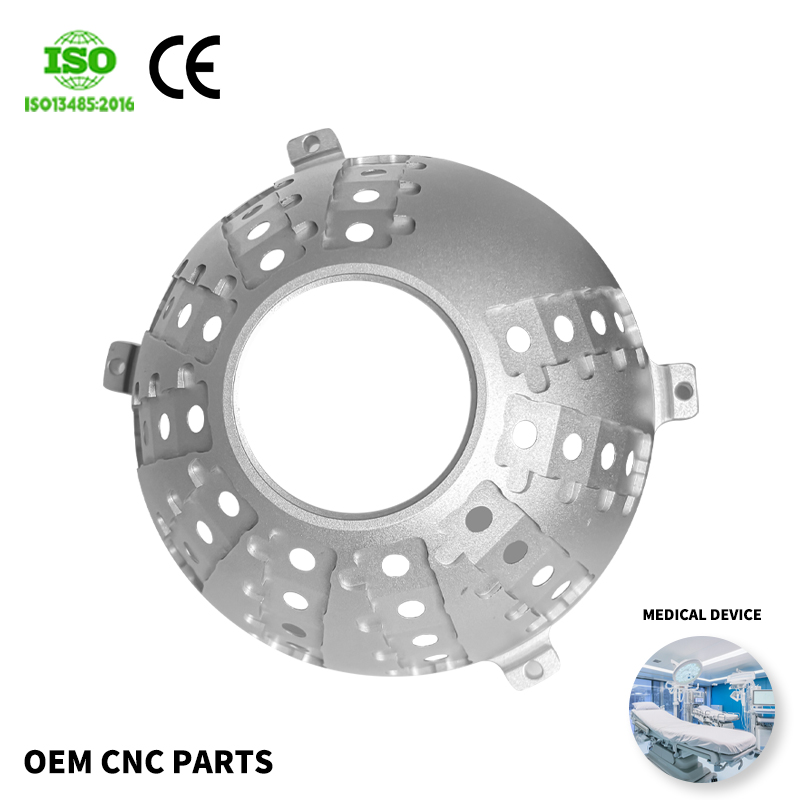
Medical machining services represent specialized precision manufacturing solutions designed specifically for the healthcare and life sciences industries. These services encompass the production of critical medical components, surgical instruments, implantable devices, and diagnostic equipment parts through advanced computer numerical control (CNC) machining, Swiss turning, electrical discharge machining, and multi-axis milling processes. Medical machining services ensure that every manufactured component meets stringent regulatory standards including FDA compliance, ISO 13485 certification, and biocompatibility requirements. The main functions include creating complex geometries with micron-level tolerances, producing sterile and clean-room compatible parts, and manufacturing from medical-grade materials such as titanium, stainless steel, PEEK polymers, and cobalt-chromium alloys. Technological features include ultra-precision cutting capabilities, surface finish optimization for biological compatibility, dimensional inspection using coordinate measuring machines, and full traceability documentation for regulatory submissions. Applications span across orthopedic implants like hip and knee replacements, cardiovascular devices including stents and pacemaker components, surgical instruments such as forceps and retractors, dental prosthetics, endoscopic equipment, and laboratory diagnostic apparatus. Medical machining services also support rapid prototyping for research and development phases, enabling faster time-to-market for innovative medical technologies. The combination of precision engineering expertise, material science knowledge, and regulatory understanding makes medical machining services indispensable for medical device manufacturers seeking reliable, compliant, and high-quality component production that directly impacts patient safety and treatment outcomes.

New Products

Choosing medical machining services delivers substantial operational and business advantages for medical device manufacturers and healthcare innovators. First, these services provide exceptional precision and consistency, ensuring that every component meets exact specifications with tolerances often measured in microns, which is critical for implantable devices and surgical instruments where dimensional accuracy directly affects patient safety and device functionality. Second, partnering with experienced medical machining services eliminates the need for substantial capital investment in specialized equipment, cleanroom facilities, and regulatory compliance infrastructure, allowing companies to allocate resources toward research, development, and market expansion instead. Third, these services offer material expertise and sourcing advantages, providing access to certified medical-grade materials with proper documentation and biocompatibility testing, which streamlines regulatory approval processes and reduces time-to-market for new medical devices. Fourth, scalability represents a significant benefit as medical machining services can efficiently transition from prototype quantities to full production volumes without requiring manufacturers to manage capacity planning or equipment upgrades. Fifth, quality assurance protocols embedded within professional medical machining services include rigorous inspection procedures, statistical process control, and complete traceability systems that satisfy FDA, CE Mark, and other global regulatory requirements. Sixth, speed-to-market acceleration occurs through concurrent engineering support, design for manufacturability consultations, and rapid iteration capabilities that compress development timelines. Finally, risk mitigation is achieved through working with established medical machining services that maintain current certifications, employ trained specialists familiar with medical industry standards, and implement contamination control procedures essential for producing components that will contact human tissue or bodily fluids, thereby protecting manufacturers from costly compliance failures and product recalls.

Tips And Tricks

Choosing CNC Aluminium Parts for Research and Development

26

Nov

Choosing CNC Aluminium Parts for Research and Development

Why CNC Aluminium Parts Excel in Research and Development Superior Strength-to-Weight Ratio for Prototyping CNC aluminium parts are crucial for creating lightweight prototypes that maintain strength and durability. Their exceptional strength-to-weig...
View More
Best Practices for Machining Titanium Alloy Components in Precision Manufacturing

05

Dec

Best Practices for Machining Titanium Alloy Components in Precision Manufacturing

Titanium alloys have become indispensable materials in precision manufacturing, particularly in aerospace, medical, and automotive industries where exceptional strength-to-weight ratios and corrosion resistance are paramount. The unique properties of...
View More
CNC Machining Guide: Turning, Milling, and 5-Axis Processes Explained

06

Jan

CNC Machining Guide: Turning, Milling, and 5-Axis Processes Explained

CNC machining represents the backbone of modern manufacturing, transforming raw materials into precision components through computer-controlled cutting processes. This advanced manufacturing technique has revolutionized industries from aerospace to m...
View More
When to Choose 5-Axis Machining for High-Tolerance CNC Components?

06

Feb

When to Choose 5-Axis Machining for High-Tolerance CNC Components?

Modern manufacturing demands precision components that meet increasingly stringent specifications across industries from aerospace to medical devices. Traditional 3-axis CNC machining, while effective for many applications, faces limitations when dea...
View More

Get a Free Quote

Our representative will contact you soon.
Email
Name
Company Name
Message
0/1000

medical machining services

Regulatory Compliance and Quality Certification

Regulatory Compliance and Quality Certification

Medical machining services maintain comprehensive quality management systems specifically designed to meet the demanding regulatory landscape of the medical device industry. These services operate under ISO 13485 certification, which demonstrates their commitment to consistent quality in medical device manufacturing and their capability to meet both customer and regulatory requirements. The quality infrastructure includes documented procedures for every manufacturing step, rigorous material certification tracking, comprehensive inspection protocols using advanced metrology equipment, and complete traceability from raw material to finished component. This regulatory foundation ensures that components produced through medical machining services can be seamlessly integrated into FDA submission packages, CE Mark technical files, and other global regulatory dossiers. Furthermore, these services understand biocompatibility testing requirements, sterilization compatibility considerations, and packaging validation needs that are unique to medical applications. By partnering with certified medical machining services, device manufacturers gain confidence that their components will withstand regulatory scrutiny, reduce approval timeline risks, and maintain compliance throughout the product lifecycle, ultimately protecting both patient safety and business reputation in this heavily regulated industry.
Advanced Precision Manufacturing Capabilities

Advanced Precision Manufacturing Capabilities

Medical machining services employ state-of-the-art manufacturing technologies that deliver the exceptional precision required for critical medical components. Multi-axis CNC machining centers enable the creation of complex three-dimensional geometries with tight tolerances, while Swiss-type turning machines excel at producing small-diameter components with length-to-diameter ratios that would be impossible with conventional methods. Electrical discharge machining allows for intricate features in hardened materials without inducing mechanical stress, and micro-machining capabilities enable feature sizes measured in micrometers for minimally invasive device components. Surface finish optimization represents another critical capability, as medical machining services can achieve mirror-polished surfaces necessary for implantable devices or specific roughness parameters that promote bone integration in orthopedic applications. Material removal strategies are carefully engineered to prevent work hardening, maintain dimensional stability, and avoid introducing contaminants that could compromise biocompatibility. The combination of advanced equipment, specialized tooling, and expert programming enables medical machining services to manufacture components that meet the most demanding specifications while maintaining repeatability across production quantities, ensuring that every part performs consistently in its intended clinical application.
Material Expertise and Biocompatibility Knowledge

Material Expertise and Biocompatibility Knowledge

Medical machining services possess deep expertise in working with specialized materials that meet the unique requirements of medical device applications. This knowledge encompasses understanding the machinability characteristics, mechanical properties, and biological interactions of materials ranging from titanium alloys and stainless steel grades to advanced polymers like PEEK, Ultem, and Radel. Material selection significantly impacts device performance, patient outcomes, and regulatory approval, making this expertise invaluable for device developers. Medical machining services maintain relationships with certified material suppliers, ensuring proper material certification documentation, lot traceability, and compliance with standards such as ASTM F136 for surgical implants or USP Class VI for biocompatibility. They understand how different materials respond to sterilization methods including autoclave, ethylene oxide, and gamma radiation, ensuring that machining processes and material selection align with intended sterilization protocols. Additionally, these services recognize how machining parameters affect material properties, preventing surface contamination, work hardening, or residual stress that could compromise biocompatibility or device longevity. This comprehensive material knowledge helps medical device manufacturers select optimal materials for their specific applications, avoid costly material-related failures, and confidently navigate biocompatibility testing requirements.

Get a Free Quote

Our representative will contact you soon.
Email
Name
Company Name
Message
0/1000

Copyright © 2026 China Shanghai Raycool Industrial Co., Ltd. All rights reserved  -  Privacy policy